Costa del Silencio Promenade
Running all along this town's rugged coastline is a quiet promenade by the sea. The promenade starts at the residential estate of Bella Vista and goes…
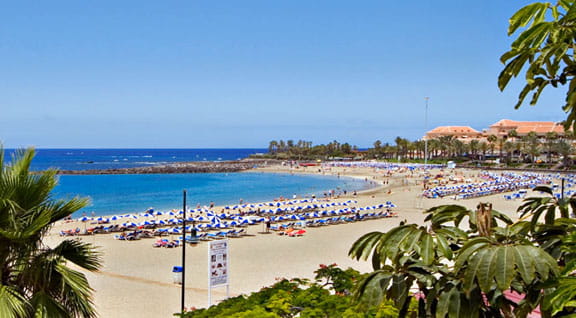
The original town centre, where the Town Hall still stands, is up in the hills. However, the booming tourism industry in the 1960s resulted in the development of the coastline around the small fishing village of Los Cristianos. Today, that village is a first class tourist resort where magnificent beaches share the coast with luxurious 4 and 5 star hotels. Its leisure options during the day and night time make it one of the driving forces of Tenerife's economy.
Arona is one of the main tourist destinations in the south if the Island, covering an area of 84.6 km2 (327 sq. miles), with 15 km (9.3 miles) of beaches. This is the third most populated municipality on Tenerife.
There are four clearly distinct areas in Arona: Playa de las Américas, Playa de los Cristianos, Playa de Las Galletas-Costa del Silencio and rural Arona. The combination of all of them is a comprehensive array of top quality tourist options (accommodation, beaches, leisure activities, countryside...), with stunning scenery and a lovely traditional Canarian atmosphere.
The area of Playa de las Américas includes several beaches and there are a wide range of water activities to choose from all year round. The town of Los Cristianos, which still preserves its seaside charm, is where most of the area's shopping and cultural activity happens, and its port is busy with boats coming and going.
Its peaceful and beautiful coastline is one of the main attractions of the area of Las Galletas-Costa del Silencio, in addition to its thriving sea life. Some of the places you won't want to leave without seeing are Punta de la Rasca and Malpaís de Rasca, which is considered a Protected Nature Area. The rural part of Arona can be found further inland, where the municipality's historic quarter lies.
A tourist train travels around the streets of Los Cristianos and Playa de las Américas picking up kids and grown-ups wishing to explore the town on a comfortable guided tour. The heart of the town of Arona is Plaza del Cristo de la Salud, which is surrounded by the town's most important buildings. This a good starting point for a walk to El Calvario, the old washing place and the Cross of San Antonio, which will reward you with great views of the coast.
Arona is located in the south of Tenerife and is one of the largest and most visited municipalities on the island. Its territory extends from inland and mid-altitude areas to very well-known coastal areas, allowing it to combine traditional settlements with important tourist zones. This diversity makes Arona a destination with multiple options for leisure, nature and culture.
Arona is known for being one of the most complete and visited municipalities in the south of Tenerife, as it combines leading tourist areas, traditional settlements and favourable weather throughout the year. It stands out for its offer of beaches, leisure and services, as well as inland spaces that preserve the rural Canarian character. This diversity makes Arona an attractive destination both for those seeking relaxation by the sea and for those who prefer outdoor activities and cultural plans.
Getting to Arona is easy thanks to its good road connections:
From Tenerife South Airport: It is the closest airport to Arona. The journey by car takes approximately 15–30 minutes, depending on the area of the municipality and traffic, mainly using the TF-1. From Tenerife North Airport: The distance is greater and the journey usually takes around one hour, depending on traffic, combining the TF-5 and the TF-1. There are also public transport connections via interurban buses.
Among the main places to see in Arona are:
Arona offers very varied plans. You can take part in outdoor activities, walk through traditional settlements, enjoy the coast or practise sea-related sports. It is also a suitable municipality for combining active tourism, family leisure and relaxation, thanks to the diversity of its territory.
Yes, in Arona there are hiking routes that run through mid-altitude areas, ravines and old traditional paths. These routes allow visitors to experience a less urban environment and discover another side of the south of Tenerife, with volcanic landscapes and open views of the ocean.
The weather in Arona is warm and stable for most of the year, with a high number of sunny days. Temperatures usually range between 18 °C in winter and 28 °C in summer, with few extreme variations. Winters are mild and summers pleasant, especially in areas close to the coast, allowing enjoyment of the beach, walks and outdoor activities at any time of year.
In Arona you can find a wide gastronomic offer. There are Canarian cuisine restaurants, traditional bars and international options, especially in the more tourist areas. There are also quieter venues in inland settlements, ideal for an unhurried meal.
Arona has a wide range of accommodation, including hotels, tourist apartments and rural lodgings in inland areas. This allows you to choose between stays near the coast or in quieter surroundings, depending on the type of trip.