Alcalá - La Jaquita promenade
The coast of Alcalá has a long promenade which is great for taking a walk and watching the sunset, and also leads you to a series of small bays with…
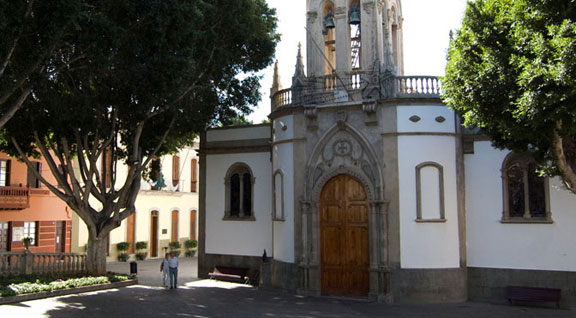
Here is a municipality offering everything visitors could ask for. Its historic quarter houses precious buildings such as the 16th century Church of Nuestra Señora de la Luz. Heading out of the centre you will come to two hamlets that seem to have been caught in a time warp: Aripe and Chirche. The coast, on the other hand, features wonderful bathing areas and places to spend a day of sun and fun by the sea.
Guía de Isora is a municipality in the south-west of Tenerife. It spans an area of 143.43 km2 (55.38 miles) and comprises 17 small towns and villages.
Several of those villages are on the coast, including the fishing village of Playa San Juan, which has become a quiet tourist area. The rest of the municipality's 15 km of coast covers Alcalá, Varadero, Piedra Hincada, Aguadulce, Fonsalía and Cueva del Polvo.
In the hills further inland are Guía de Isora – at an altitude of 580 m (1,900 ft) –, Chío, Tejina, El Pozo, Acojeja, Aripe and Chirche.
Then up in the mountains you will find Chiguergue, Vera de Erques, El Jaral and Las Fuentes. The Natural Monument of Montaña de Tejina also belongs to the municipality of Guía de Isora. This mountain area reaches altitudes of 1,055 m (3,460 ft) and has sites of great archaeological significance. The springs in the Tágara ravine are another of the municipality's attractions.
The historic quarter of Guía de Isora was declared an Asset of Cultural Interest in 2009 thanks to its many beautiful buildings representing traditional Canarian architecture. Most of these buildings can be found on the streets of Calle de Abajo, Calle de Arriba, Calle Tagoro and La Vera. The layout of these streets, with their lovely little alleyways, is the typical arrangement of Spain's old towns, with varying widths and irregular shapes. There are also traditional elements such as the public wash basins that were part of the residents' everyday lives up until just a few decades ago, which now remain as part of the municipality's cultural heritage.
The historic quarter of Guía de Isora, which stands up in the hills in this municipality, combines the scenic beauty of Montaña de Tejina with the ever-present blue of the Atlantic ocean on the horizon. As you roam its charming streets you will discover a town centre that was declared an Asset of Cultural Interest in 2009. Guía de Isora also has a wealth of architectural heritage you will find worthy of discovery. For instance, you will see elements of 18th century domestic rural architecture standing amidst 19th and 20th century constructions. The Church of Nuestra Señora de la Luz and the springs and wash basins are signs of the town's popular and cultural heritage that lives on to this day in Guía de Isora.
The coast of Guía de Isora has a lovely promenade along Playa de San Juan where there is an old lime kiln. If you walk along it towards Alcalá, you will discover a series of lovely bays with black sandy beaches and natural rock pools. A great way to end your tour of the municipality is by the sea, wallowing in Guia de Isora's sunshine and warm weather and taking in the scenic beauty of its coast.
Approved trails in the municipality
For hikers, there is plenty of cultural and natural heritage to discover in Guía de Isora along its various signposted traditional footpaths. There are trails across its nature areas, such as PR-TF 70 Guía de Isora – Tágara – Boca Tauce, which takes roughly 3 hours and sets off on a steep climb from the town of Guía de Isora. This intermediate-level hike is physically demanding but the strain is worth it for the sight of the vineyards, old kilns and threshing fields that bear witness to the municipality's agricultural past.
Guía de Isora is located in the south-west of Tenerife, between Adeje and Santiago del Teide. The municipality stretches from coastal areas to midlands and high mountain zones, giving it a diverse landscape and a calmer character than many other destinations in the south of the island.
Access to Guía de Isora is convenient thanks to its connection to the island's main road network:
The climate in Guía de Isora is stable and mostly sunny throughout the year, typical of the southwest of Tenerife. The average temperature in the more urban area is around 16-18 °C, although on the coast of the municipality (Alcalá area or Playa de San Juan) the climate is much warmer and drier, with averages closer to 22-23 °C.
Activities in Guía de Isora combine rural surroundings, coastline and local life:
Yes, the coastline has several volcanic bathing areas spread along the municipality's shore:
These spots are generally less crowded than other beaches in the south of Tenerife and retain a more local character.
Yes, hiking in Guía de Isora allows visitors to travel from the coast to the mountain areas, passing through ravines, traditional hamlets and agricultural landscapes:
In Guía de Isora you will find restaurants and bars serving traditional Canarian cuisine, located both in the town centre and along the coast. It is common to enjoy local dishes, fresh fish and simple recipes made with regional ingredients, all in a relaxed and friendly atmosphere. In coastal areas it is common to dine close to the sea, while inland venues are often frequented by residents and are ideal for discovering the everyday gastronomy of the municipality. There are also cafés and small establishments where you can take a break during your visit or after a day of outdoor activities.
Accommodation in Guía de Isora includes apartments, holiday homes and hotels, both along the coast and in quieter inland areas. It is a suitable option for travellers looking to relax outside the busiest tourist zones in the south of Tenerife.
Festivities in Guía de Isora are linked to religious traditions and popular celebrations held across the municipality's different neighbourhoods. Among the best known are:
Dates may vary each year, so it is advisable to check the schedule before visiting.