Güímar Town Hall
The building that is now used as the municipal town hall was built in 1649 as a Dominican monastery. In the mid 19th century, it was used for civil…
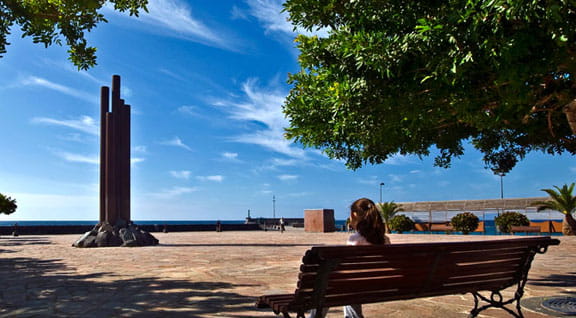
The local devotion to Saint Peter is clear from the number of churches there are in Güímar in his honour: the Chapel of San Pedro Arriba, the Church of San Pedro Abajo and the Church of San Pedro Apóstol. All three are certainly worthy of a visit whilst in the municipality of Güímar. The cave of Chinguaro is another must-see, together with its quiet beach surrounded by restaurants serving local specialities.
Güímar is a municipality in south-east Tenerife, a short way from the capital, Santa Cruz de Tenerife. The municipality borders with Arafo, La Orotava and Fasnia. Standing at the highest point is Izaña, with a major astronomy centre and one of Spain's oldest meteorological observatories. Nestled in the Valley of Güímar, the municipality houses the Malpaís de Güímar Special Nature Reserve, which comprises a huge volcanic cone and the landscape created by the lava flowing into the sea. Its abrupt coastline features some bays with beaches made of pebbles and black sand where the ravines of Herques, El Escobonal and Badajoz open into the ocean. It has a quaint marina with every amenity that sailors might need. Beside it is the popular beach of Playa del Puertito, where swimmers are sheltered from the waves by several stone breakwaters.
The Valley of Güímar also covers part of Corona Forestal Natural Park and the Protected Landscape of Las Siete Lomas. Running through the valley is the Herques ravine, which is classed as a Natural Monument. Up in the hills of Güímar, visitors will find the Pirámides de Güímar Ethnographic Park, which was built around the tiered pyramids that stood in the area. The creation of this museum-like park was encouraged by the explorer Thor Heyerdahl and it has several halls devoted to the world's various ancient civilisations that have erected pyramids.
Routes around the municipality
Starting from the Chapel of San Pedro Arriba is an urban route to explore the artistic and architectural heritage of Güímar. The trail journeys through the historic square and Church of San Pedro Apóstol and the Church of Santo Domingo de Guzmán. The square that stands opposite the parish was built in 1739 and is a perfect place to stop for a rest under the generous shade of its trees. Nearby is the Town Hall which has the structure of a religious monastery as this was the first use it was given after construction. The route then continues to the church and chapel of San Pedro Abajo and the Station of the Cross that was raised on the crossing between the roads of El Socorro and Camino Real de Candelaria. The walks ends at Plaza de las Flores, with a modern style that contrasts with Güímar's traditional Canarian architecture.
Approved trails in the municipality
The landscape of Malpaís de Güímar can be explored by taking an approved low-difficulty trail that is suitable for hikers of all ages and levels. This round trip starts and finishes in Puertito de Güímar after 6.86 km (4.26 miles), lasting roughly two and a half hours. The trail reveals the ecological significance of this Special Nature Reserve, which has been protected since 1987. The scenery is adorned with Canary Island spurges and tabaibas, broom bushes and Canarian clovers. Visitors will also discover the volcanic tubes and caves that run all across the Malpaís landscape, such as Cueva Honda, which is over 100 m (330 ft) long.
Güímar is located in the south-east of Tenerife, in the valley of the same name, between Candelaria and Fasnia. The municipality combines agricultural midlands, coastal areas and protected natural spaces, with a strong traditional character.
Access to Güímar is convenient thanks to its proximity to the metropolitan area and the southern transport axis of the island:
The climate in Güímar is generally sunny and dry, characteristic of the southeast of the island. Mild winters and warm summers predominate, allowing for outdoor activities throughout the year. Average temperatures are about 20-22 °C, with warmer summers and equally mild winters.
Activities in Güímar combine culture, nature, heritage and coastline:
Yes, the coastline includes several bathing areas along the municipality's shore:
These volcanic bathing spots are mainly frequented by residents and are suitable for swimming when the sea is calm.
Yes, hiking in Güímar is particularly attractive thanks to its contrasting landscapes, with routes ranging from the coast to high-mountain areas through volcanic badlands, ravines and pine forests:
In Güímar you will find restaurants and bars serving traditional Canarian cuisine, particularly in the historic centre and the coastal area. Visitors can enjoy fresh fish, traditional dishes and simple recipes prepared with local ingredients in a relaxed and friendly atmosphere. In Puertito de Güímar it is common to dine by the sea, while inland venues are often frequented by residents and are ideal for discovering the everyday gastronomy of the municipality.
Among the most well-known celebrations are several traditional festivals held throughout the year, with religious ceremonies, cultural events and popular activities involving the whole municipality:
Accommodation in Güímar includes apartments, holiday homes and some rural houses, both in the town centre and in quieter areas of the valley and coast. It is a good option for travellers who prefer to stay outside the busiest tourist zones while still enjoying good connections for exploring the island.
Yes, aloe vera cultivation forms part of the agricultural activity in the Güímar Valley, and it is possible to find farms and spaces dedicated to growing this plant in and around the municipality. In some cases visitors can learn about the plant and its processing, as it is a traditional product of the south-east of Tenerife that adapts well to the area's dry and sunny climate.