
Palacio Salazar (Episcopal Palace)
The Count of Valle Salazar ordered the construction of this palace in 1681. This two-storey palace has a central gable on the façade, as well as a…
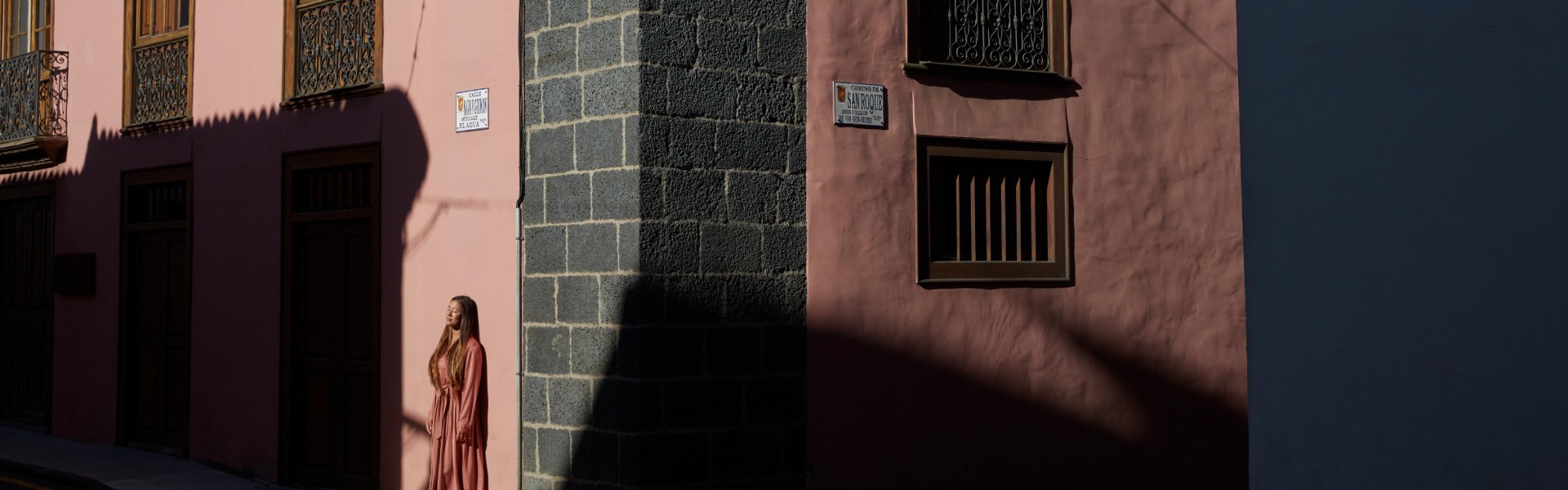
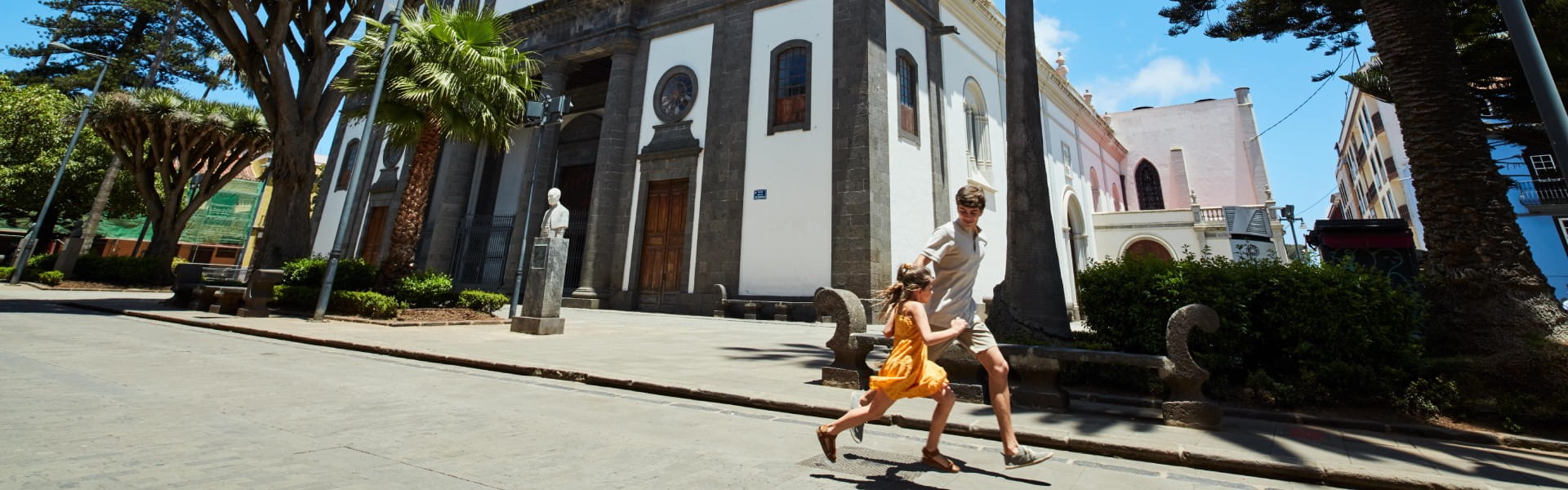
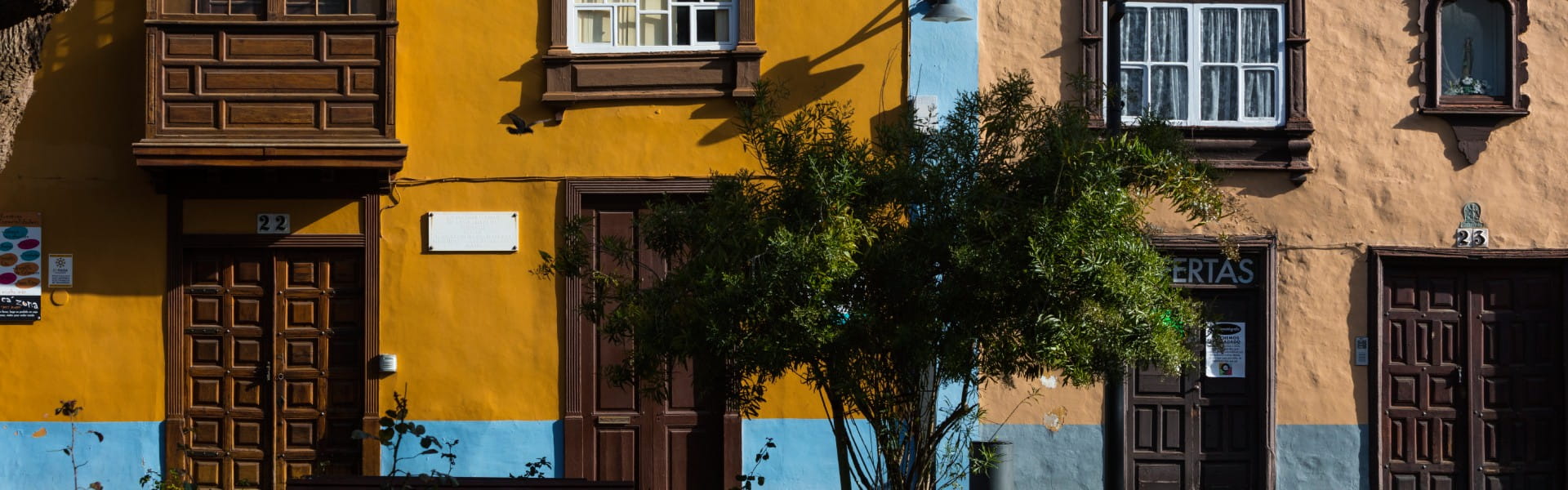
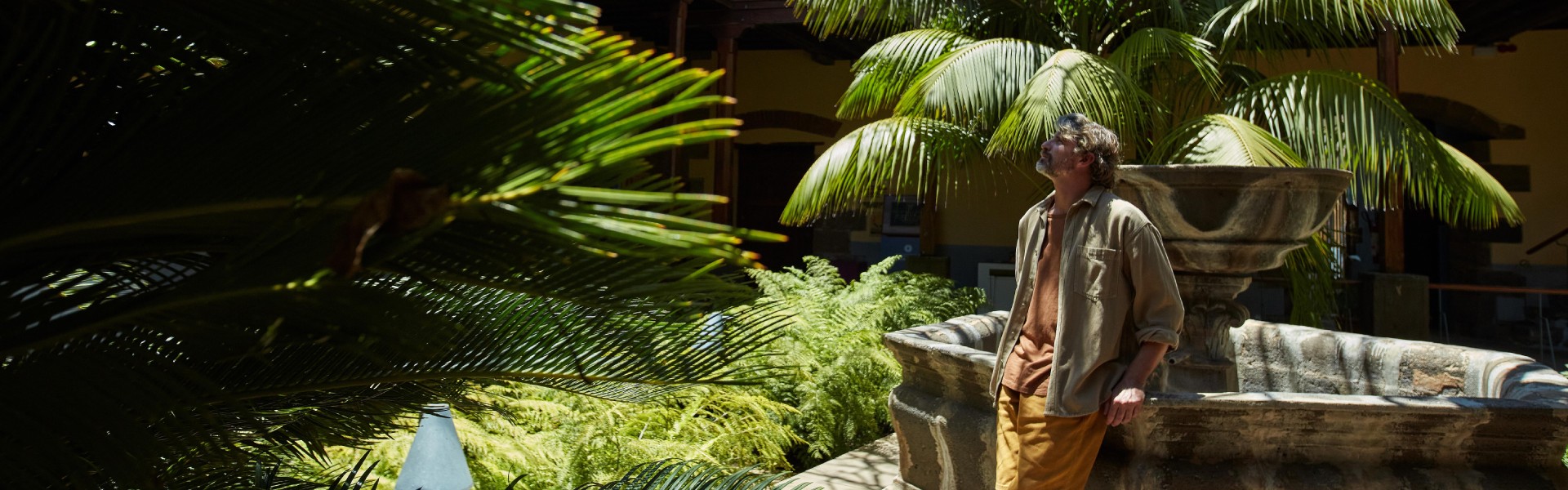
La Laguna is a meeting place where modern minds and young students gather around the first university in the Canary Islands. The pedestrian streets in the city centre are always bustling with life, street musicians and hundreds of taverns, restaurants and bars. In addition to the retail therapy you will find in its great shops full of vintage items and fashion labels hot off the catwalk, it is nice to simply explore the churches, mansions and historic buildings that make this old and dazzling city a UNESCO World Heritage Site.
The municipality of San Cristóbal de La Laguna lies in north-east Tenerife, in-between the Anaga mountain range and the slopes of La Esperanza. Most of the city stands at an altitude of roughly 600 m (1,970 ft), with the highest point being Cruz de Taborno, 1,020 m (3,350 ft) above sea level. The coastal part of the municipality in the north covers the farmland regions of Tejina and Valle de Guerra, as well as the tourist destinations of Bajamar and Punta del Hidalgo. By contrast, in Anaga you will find little hamlets such as El Batán and Las Carboneras. Covering a vast open area in the middle of the municipality is San Cristóbal de La Laguna, which was declared an Asset of Cultural Interest and a World Heritage Site by UNESCO in 1999. La Laguna was the first unwalled colonial city and still preserves its original 15th century layout almost intact. In fact, this layout was used as a model for building many other colonial cities in America. Its streets, with their fantastic shopping atmosphere, gastronomy and leisure, are also full of monuments and historic buildings.
The Guanche name for the area on which La Laguna stands was Aguere, and that term is sometimes still used to refer to the municipality. It is also known as the City of the Adelantados, as this is where the Adelantado Alonso Fernández de Lugo and his family settled. After the conquest of Tenerife, La Laguna became the Island's first capital city, turning it into the heart of political, financial and cultural power on the archipelago. The first plan of the city on record was drawn by the Italian engineer Leonardo Torriani in 1588. San Cristóbal de La Laguna currently bears the honorary titles of Noble, Loyal and Faithful city, and is also known as the Illustrious Historic City of San Cristóbal de La Laguna.
The University of La Laguna is one of the most emblematic institutions in the municipality and is, of course, a sign of the city's cultural relevance. Tenerife's first airport – Tenerife North – is also here, in the area known as Los Rodeos on the outskirts. The airport is well connected to the rest of the archipelago, and also links up to various destinations in Spain and abroad. Its location near to the capital and to the tourist area of Puerto de la Cruz is a great advantage.
The coast of San Cristóbal de La Laguna has a series of lovely natural swimming pools and rock pools in Punta del Hidalgo, with a modern lighthouse nearby. The nearby town of Bajamar also has large bathing areas, making it a popular place among the locals and tourists for a leisurely day by the sea.
The main advantage of the historic quarter of La Laguna is that its wealth of heritage is nicely packed together in a relatively small space because of the city's past and the way it has evolved. This makes it easy to cover on a leisurely walking tour starting from Plaza del Adelantado to see the beautiful buildings that surround it, such as the house of Casa de Anchieta, the Palacio de Nava and the monastery of Santa Catalina de Siena, as well as the City Hall. Continue your tour along Calle de la Carrera, which is one of the city's original streets, to discover the houses of Casa del Corregidor, La Alhóndiga and Los Capitanes. The walk goes on past shops, cafés and restaurants to reach the Cathedral of San Cristóbal de La Laguna, which is well worthy of visiting thanks to its wealth of artistic heritage. Next up is the square and church of La Concepción, whose steeple stands proudly over the city. Near the square is Calle de Herradores, a street that is full of traditional Canarian architecture, as well as Calle de San Agustín, where visitors will see the houses of Los Jesuitas, Montañéz and Salazar.
Other noteworthy buildings include Palacio de Lercaro, which houses the Tenerife History Museum; the church and hospital of Nuestra Señora de los Dolores; the ruins of the church of San Agustín; and the Canary Islands Institute. If this tour seems a little too short, feel free to carry on around the nearby streets where there are plenty of other interesting buildings such as Casa de Ossuna and the palace house of Rodríguez de Azero. Another must on your tour is the Royal Sanctuary of Santísimo Cristo, one of the most worshipped figures in the Canary Islands.The City Council of La Laguna organises regular free guided tours around the city, with guides who will show you the sights and help you understand the municipality's valuable heritage.
Approved trails in the municipality
San Cristóbal de La Laguna has various approved trails crossing its lush hillsides. Route PR – TF 10 Cruz del Carmen - Punta del Hidalgo, for instance, journeys down from the Visitor Centre to the coastal area of Punta del Hidalgo and is recommended only for more experienced hikers as it covers approximately 10 km (6.2 miles) and takes about four hours. The route goes through the hamlets of Chinamada and Las Carboneras. Another much shorter and easier trail that also explores these two hamlets is the PR –TF 10.1 Las Escaleras – Las Carboneras – Chinamada.
La Laguna, officially San Cristóbal de La Laguna, is located in the northeast of the island, just a few kilometres from Santa Cruz de Tenerife. Its historic centre is a UNESCO World Heritage Site, with pedestrian streets, squares, churches and colonial buildings that preserve traditional Canarian architecture. The municipality combines historical heritage with green areas and an active cultural life, making it an ideal place to explore on foot and discover the history of Tenerife.
Getting to La Laguna is very easy thanks to its proximity to Santa Cruz de Tenerife and its good road and public transport connections:
Once in the historic centre, it is easy to walk through the pedestrian streets, squares and main monuments.
La Laguna combines historical heritage, culture and urban life:
La Laguna offers activities for all ages:
Yes, the municipality of La Laguna is an ideal destination for hiking thanks to its proximity to the Anaga Rural Park, declared a Biosphere Reserve. There are routes of different difficulty levels crossing laurel forests, ravines and viewpoints overlooking the ocean, such as the trails of Taganana or the Mercedes Forest. In addition, within the historic centre, cultural walks can be enjoyed, combining history, architecture and heritage. The routes are accessible all year round thanks to La Laguna’s mild climate, and it is recommended to wear comfortable footwear, bring water and use sun protection.
The weather in La Laguna is mild and pleasant throughout the year, with an average annual temperature of approximately 21 °C, with minimum temperatures around 17 °C and maximum temperatures close to 27 °C. As it is located in the north of Tenerife, the municipality may experience slightly more humidity and cloud cover than the south of the island, especially in mid-altitude and elevated areas, allowing walks, cultural visits and outdoor activities at any time of year.
La Laguna can be visited all year round thanks to its mild and sunny climate. Spring and autumn are ideal for exploring the historic centre without crowds and taking part in cultural events. The climate allows visitors to enjoy walks, museum visits and outdoor terraces at any time of year.
In La Laguna there are gastronomic options for all tastes and budgets:
San Cristóbal de La Laguna was declared a UNESCO World Heritage Site in 1999 thanks to its well-preserved historic centre, one of the first in the Canary Islands planned according to a colonial urban layout without walls. Its pedestrian streets, squares, churches and stately houses reflect traditional Canarian architecture and sixteenth-century urban planning, serving as a model for other colonial cities in the Americas. This recognition highlights the cultural, historical and architectural importance of La Laguna and makes it an essential place to visit in Tenerife.
La Laguna is a very active cultural centre, with festivities and events combining tradition, music and art. Among the most important are:
These events allow visitors to enjoy the city both by day and by night, combining religious traditions, music, theatre, folklore and family activities in the historic centre and public spaces.