La Sabina lookout point
Standing atop the town's cliff as part of the protected landscape of Costa de Acentejo is a lovely lookout point affording breathtaking views over the…
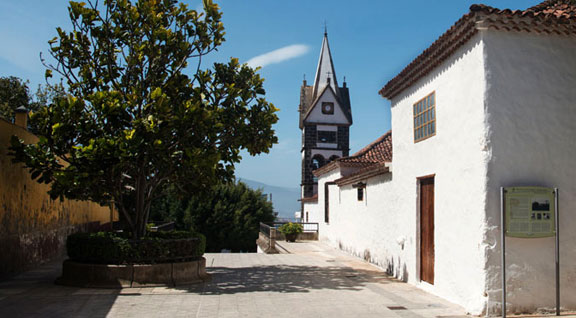
If there is anything La Victoria is renowned for, it has to be the taverns that open their doors every weekend to welcome locals from all over the Island. This is a great way to really get to know the town, which owes its name (meaning The Victory) to the defeat of the Guanches against the Spanish conquistadors.
The municipality lies in north-west Tenerife, spanning an area of 18.36 km2 (7.09 sq miles). The landscape around La Victoria de Acentejo is mostly rural farmland planted with cereal, banana groves and vineyards. In fact, the region is one of the major wine producers in northern Tenerife, producing the Tacoronte-Acentejo designation of origin. The municipality was named The Victory after the second battle that took place in Acentejo, in which the Spanish army defeated the Guanches, marking the end of the conquest of the Canary Islands. As a sign of gratitude for their success on the battle field, Alonso Fernández de Lugo had a church built in honour of Nuestra Señora de la Victoria, though the chapel was then replaced with a more sturdy building in 1578. Soon after the battle, there was an influx of settlers and a series of hamlets formed, whose inhabitants lived on farming and livestock, though that reality has changed nowadays. The municipality has a long-standing craft-making tradition in pottery and lace, which is mostly upheld by the local women, as well as the manufacture of traditional chairs. Making barrels and wine presses is another of the craft activities that was once of great importance in the municipality.
La Victoria has a range of restaurants and taverns serving traditional meat and fish dishes with their local wine. Special mention must be made here of the Guachinche taverns, which are rural establishments that serve their own home-made wine together with the most typical local recipes. The truth is that La Victoria's vineyards not only yield wonderful grapes for excellent wines, but they also create a beautiful landscape in which to savour the traditional gastronomy.
Trails in the municipality
The traditional road that pilgrims used to walk along to reach Candelaria still remains and it is a key element in the Island's traditions, especially for the towns and villages it passes. In the town of La Victoria de Acentejo, the road begins in the district known as La Sebe and it then meanders south. Hikers will find that part of the road has now become the main road, up until the Igueste de Candelaria trail, which leads on to the Patrona de Canarias basilica. The trail takes about seven hours to complete and ventures beyond the municipal boundary of La Victoria de Acentejo on a difficult walk.
For those wishing to stay within the municipality's boundaries, there is a network of trails known as Bosque de Castaños, which explores the pine woodland, chestnut forests and lookout points of La Victoria. Some of these spots afford wonderful views over the Atlantic and Mount Teide.
La Victoria de Acentejo is located in the northwest of Tenerife, in a rural and agricultural area covering 18.36 km². The municipality is surrounded by green landscapes, with banana plantations, cereal crops, and vineyards that are part of the renowned Tacoronte-Acentejo wine region. It is an ideal destination for those seeking tranquility, nature, and Canarian traditions during their walks.
In the town there are several places of interest that you cannot miss:
The climate in La Victoria de Acentejo is mild and pleasant year-round, with gentle winters and warm summers, making it ideal for enjoying outdoor activities, strolling through vineyards, and visiting wineries. The combination of temperature and scenery makes it a perfect destination for those seeking rural and gastronomic tourism.