Other details
- Closed: 24, 25 and 31 December, 1 and 6 January and Carnival Tuesday.
- Tuesday to Saturday, from 9am to 8pm.
- Sundays, Mondays and public holidays 10am to 5pm.
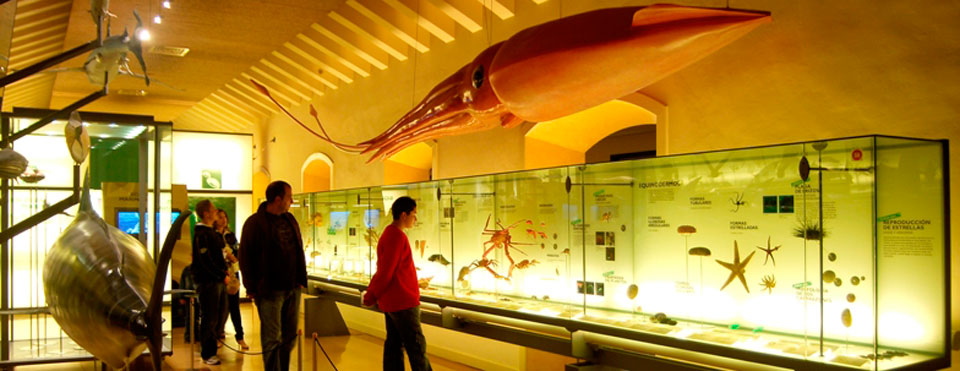
The Museum (MUNA) is housed in an emblematic building in the island capital: the Former Civil Hospital, an outstanding example of the islands’ Neoclassical architecture. Its renovation scheme sought a spatial balance between the areas intended for exhibitions and those aimed at other cultural and leisure uses (documentation centre and library, multi-use room, restaurant, shop, courtyard and gardens, etc.).
On one hand, this museum allows visitors to find out about the natural wealth of the Canary Islands and, on the other, to discover the largest existing collection related to the culture of the Guanche, the aboriginal people who lived on the island of Tenerife before the arrival of the first European conquerors.
MUNA is Tenerife’s Museum of Nature and Archaeology, located in Santa Cruz de Tenerife. Its exhibitions provide an insight into the natural and archaeological heritage of the Canary Islands, from the volcanic origins of the islands to their flora, fauna and the history of Tenerife’s ancient inhabitants. One of its main attractions is the collection devoted to Guanche culture. Through archaeological artefacts, human remains, audiovisual resources and scientific content, the museum explains how the Guanches lived, how they interacted with the land and what their funerary practices were. The visit also provides an opportunity to discover the geological formation of the archipelago, the natural diversity of the islands and the processes that have resulted in numerous endemic species. It is therefore of interest both to those who wish to learn about Tenerife’s history and to those curious about volcanology and the natural sciences.
The MUNA museum is located in the centre of Santa Cruz de Tenerife, on Calle Fuente Morales. It is within easy walking distance of Plaza de España, the Nuestra Señora de África Market and the capital’s main bus station. You can also get there by tram and get off at the Fundación stop on Line 1. If you prefer to travel by car, there are public car parks near Plaza de España, the market and Calle Ramón y Cajal. Its location makes it easy to combine the visit with a walk through the historic centre of Santa Cruz, a visit to TEA Tenerife Espacio de las Artes or a stroll along the traditional Calle de La Noria.
MUNA’s exhibition rooms are open:
Admission is permitted until 30 minutes before closing, so it is advisable to arrive with enough time to explore the exhibitions at a relaxed pace. The museum is closed on 24, 25 and 31 December, 1 and 6 January, and Carnival Tuesday. These opening hours may change because of celebrations or special circumstances, so it is advisable to check the official information before travelling. For the latest information, it is best to visit the visitor information section of the official Museos de Tenerife website before setting out. It also lists closing dates and the latest admission time for the exhibition rooms. On the same page, you will find the general information telephone number, the email address for bookings and the contact details of the Education and Cultural Outreach Department. This department can assist with workshops, school visits and other educational activities. If you need to resolve a specific matter, such as accessibility, a group booking or the availability of an exhibition, it is advisable to contact the museum in advance. This will help you avoid unnecessary journeys and plan your visit more effectively.
MUNA has a standard admission fee and reduced rates for certain groups, including students, older people, large families, Canary Islands residents and organised groups. Some categories are also entitled to free admission, and Museos de Tenerife establishes certain periods when entry is free. Prices and conditions may change, so it is advisable to check the official ticket prices page before your visit. Some temporary exhibitions, workshops or special activities may have different admission conditions from those of the permanent collection. Before booking, check which ticket you need, whether you must provide proof of eligibility for a reduced rate and whether the activity you are interested in requires advance registration. It is also worth checking the conditions for groups and educational institutions.
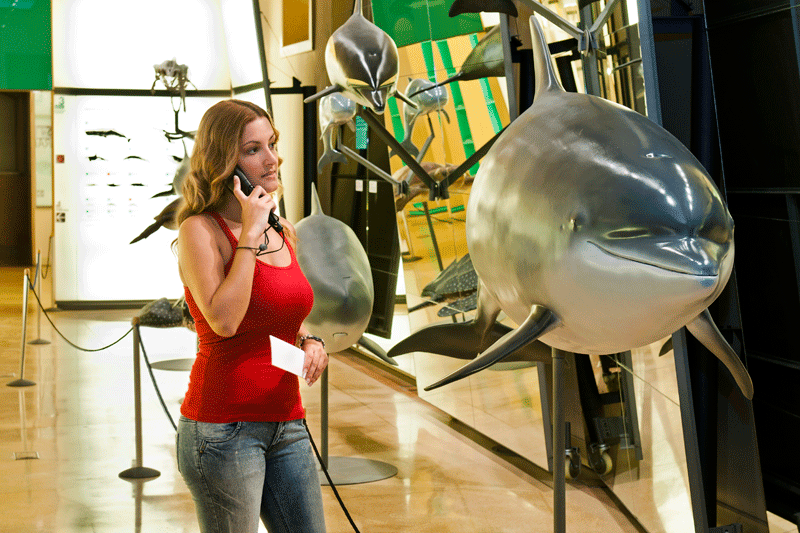
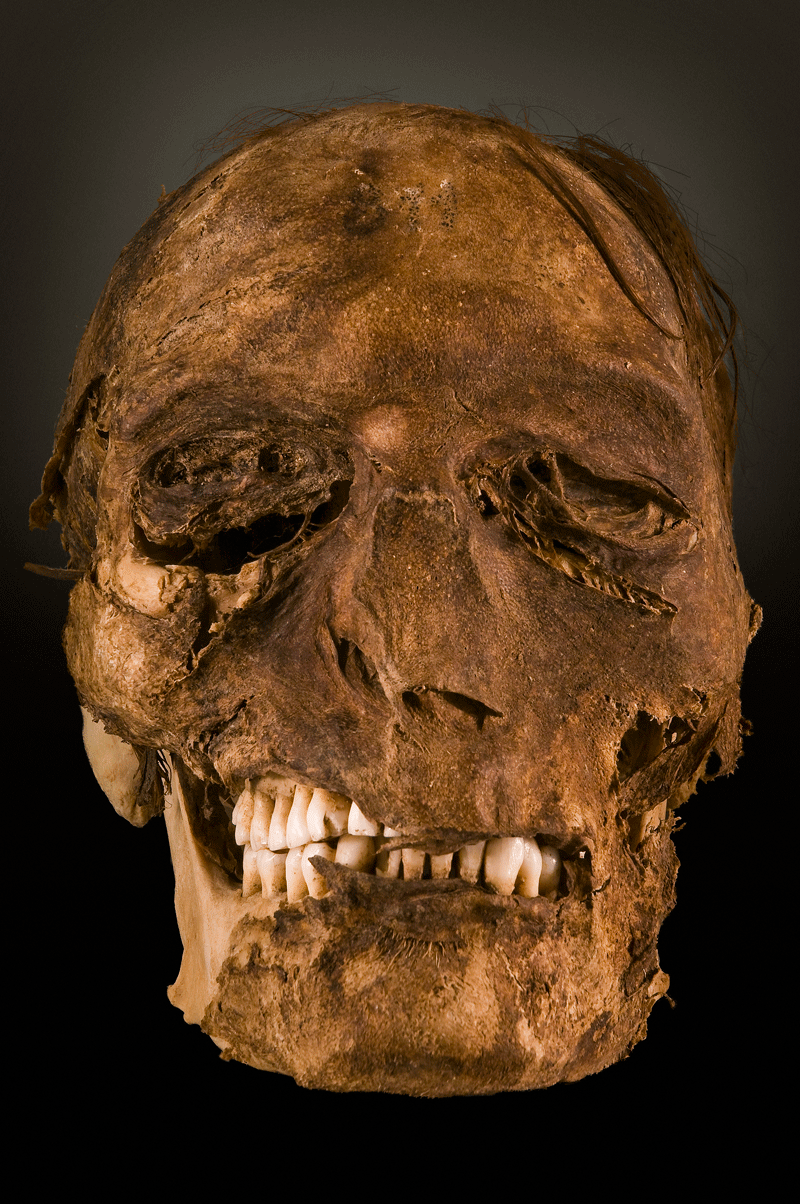
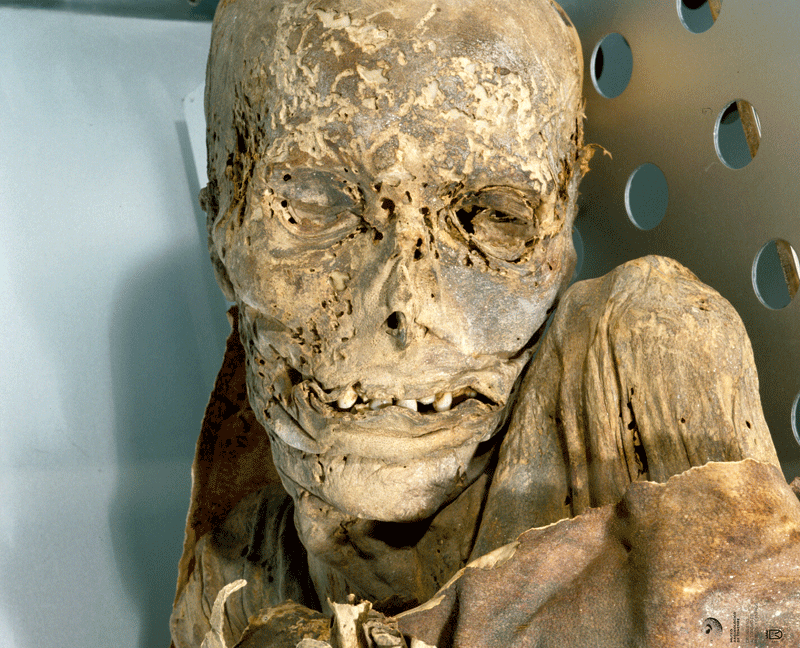
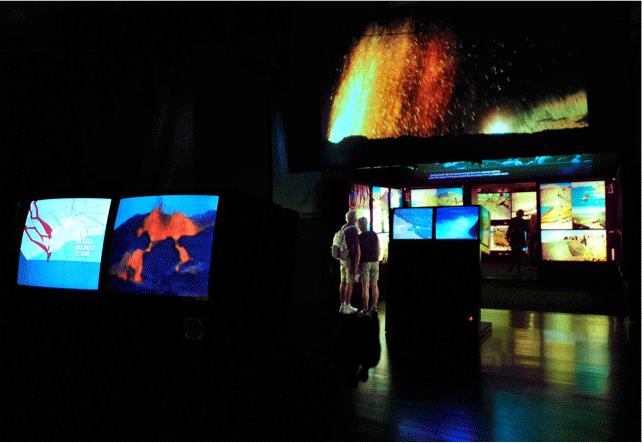
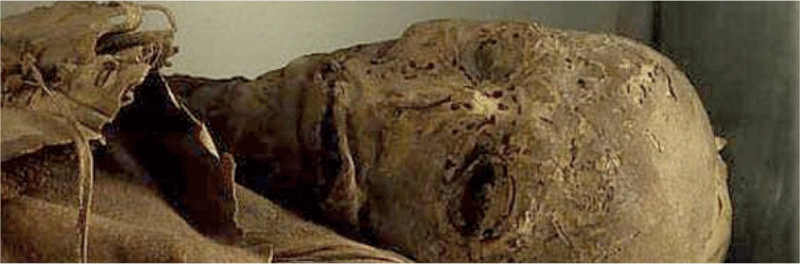
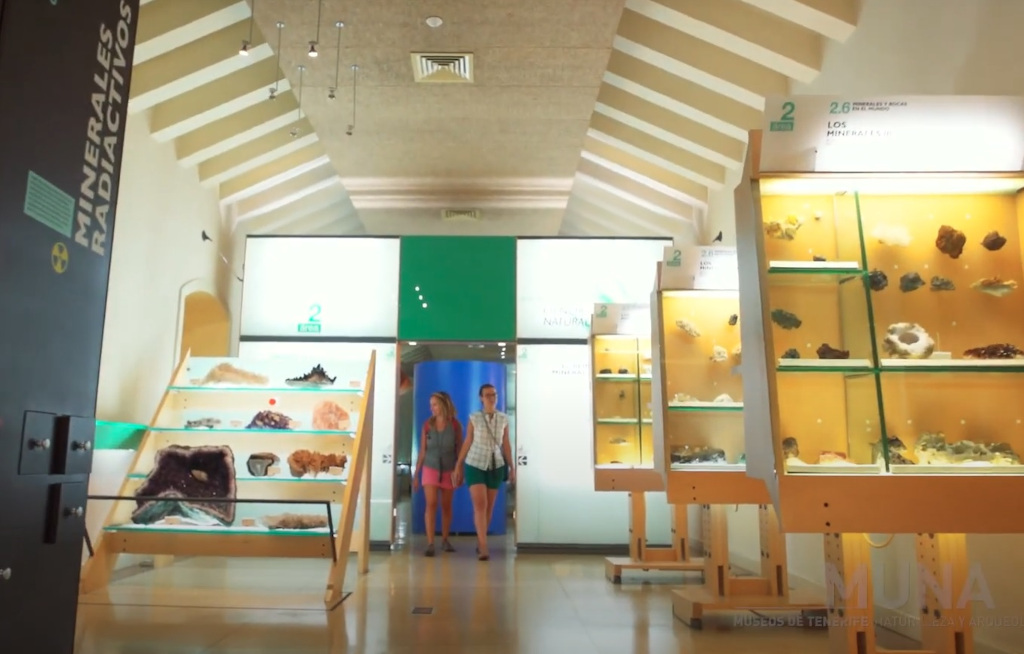
MUNA houses permanent exhibitions devoted to the natural and archaeological heritage of the Canary Islands. The museum route explores the volcanic formation of the archipelago, the biodiversity of the islands and the history of Tenerife’s ancient inhabitants through original artefacts, archaeological remains, scientific materials and audiovisual resources. One of the most notable sections focuses on Guanche culture. The exhibition displays tools, everyday objects and archaeological remains that help visitors understand how these communities lived, how they used the land, what their main activities were and how their society was organised under the authority of the menceyes. A particularly notable part of this section is devoted to funerary practices, where visitors can see Guanche mummies and other bioanthropological remains. The exhibits explain the techniques used to preserve bodies, funerary rituals and the information specialists can obtain about the diet, health and living conditions of the indigenous population. Because of the nature of some of the exhibits, this room may be unsettling for sensitive visitors or young children. Another of the museum’s main exhibitions is devoted to volcanoes and the geological origins of the Canary Islands. Through volcanic materials, scientific explanations and audiovisual content, visitors can discover how a volcanic island is formed, what happens during an eruption and how landscapes evolve after volcanic activity. The museum also explores the flora and fauna of the Canary Islands, paying particular attention to species native to the archipelago and the processes through which life gradually colonised the islands. This part of the visit helps explain why Tenerife and the rest of the Canary Islands have such distinctive biodiversity. In addition to these permanent collections, MUNA organises temporary exhibitions on archaeology, nature, science and culture. As the programme changes throughout the year, it is advisable to check the official events calendar before visiting to see which exhibitions are available.
MUNA organises temporary exhibitions, guided tours, workshops, talks, presentations, scientific activities and cultural events. As the programme changes throughout the year, the most practical option is to check the museum’s official events calendar before visiting. Each activity has an information page stating the subject, date, time, intended audience and whether registration is required. Some activities are included with museum admission, while others may require booking, have limited capacity or be subject to specific conditions. If you are particularly interested in archaeology, nature, film, talks or family activities, browse the calendar by category and subscribe to the Museos de Tenerife newsletter. This will allow you to keep up to date with new exhibitions and events without relying on information that may become outdated.
Yes. MUNA can be a very interesting visit for children and families, particularly if they are curious about animals, volcanoes, fossils, archaeology or the ancient cultures of the Canary Islands. Its collections, natural science exhibits and audiovisual resources help explain these subjects in a visual and accessible way. The museum also runs an educational programme featuring workshops, guided tours and activities related to archaeology, bioanthropology and the natural sciences. Many activities are aimed at schools, although the calendar may also include family workshops and activities adapted to different age groups. Some experiences include games, observation, experiments and participatory activities linked to the museum’s exhibitions. In this way, children do not simply look at the exhibits but can engage with the content more actively. To maintain their interest during a self-guided visit, it is often better to select a few rooms rather than trying to cover the entire museum too quickly. You can focus the visit on volcanoes, Canary Islands wildlife, Guanche culture or the mummies, depending on each child’s age and interests. Before visiting, check MUNA’s educational programme and family events calendar. Activities in the education room, recommended ages, available places and booking conditions may vary, and some workshops require advance registration.
The MUNA building has a dining space, as well as a shop, courtyards, gardens, a library and other cultural areas. The museum includes a space that combines gastronomy, culture, music, leisure and events within its surroundings. Its operation and opening hours may differ from those of the exhibition rooms. Before planning a meal or a break at the MUNA café, check the latest information about the dining area. You will also find other places to eat in central Santa Cruz and at the nearby Nuestra Señora de África Market.
The time needed to explore MUNA depends on the pace of your visit and your interest in archaeology, Guanche mummies, the natural history of the Canary Islands or the volcanic origins of the archipelago. To see the main exhibitions at a relaxed pace, it is advisable to allow between one and a half and two hours. If you wish to spend more time on the audiovisual resources, read the information in greater detail and also visit the temporary exhibitions, you may need between two and three hours. Families with children can choose a shorter route and focus on the rooms best suited to their ages and interests. It is also advisable to allow additional time if you are taking part in a guided tour, workshop or educational activity. Thanks to its location in the centre of Santa Cruz de Tenerife, MUNA can easily be included in a cultural and urban itinerary. After your visit, you can go to TEA Tenerife Espacio de las Artes, located next to the museum, explore the Nuestra Señora de África Market or continue towards the Church of La Concepción, Calle de La Noria and Plaza de España. If you are spending a weekend exploring Tenerife’s museums, you can combine MUNA and TEA on the same day. On another day, a good option is to travel to La Laguna and visit the Museum of Science and the Cosmos or the Museum of History and Anthropology of Tenerife. Before visiting, check MUNA’s events calendar to see whether there are any temporary exhibitions, guided tours or special activities you would like to include in your itinerary.
The MUNA building has universal accessibility certification and was renovated to combine its exhibition rooms with a range of cultural and visitor service areas. Even so, accessibility needs can vary from one person to another. If you require information about lifts, adapted routes, assistance or participation in a particular activity, it is advisable to contact the museum before visiting.