Teide National Park
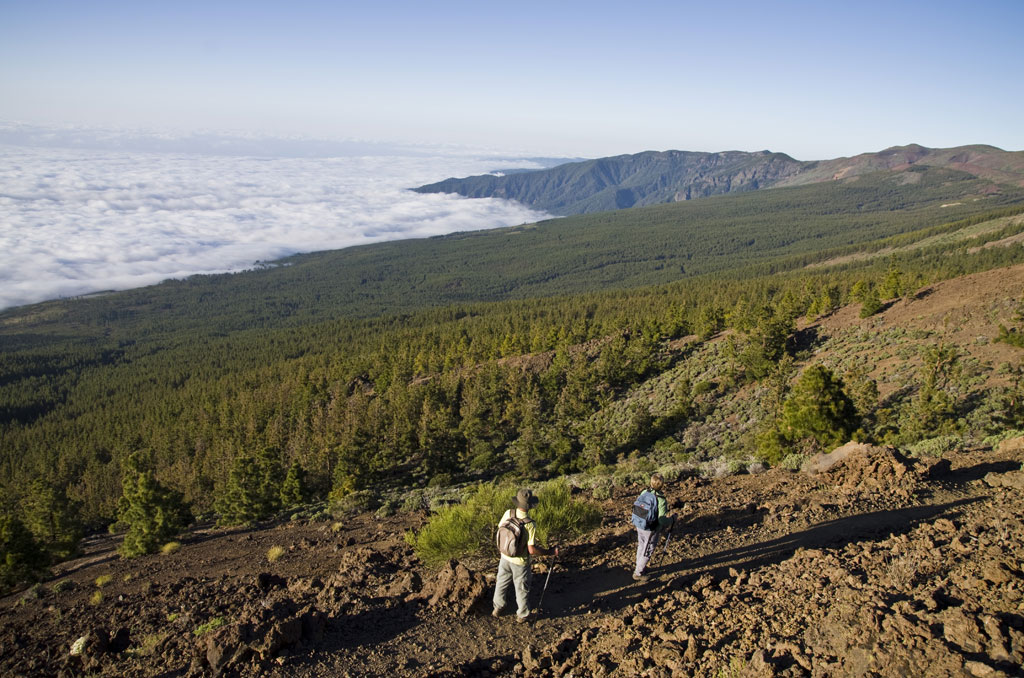
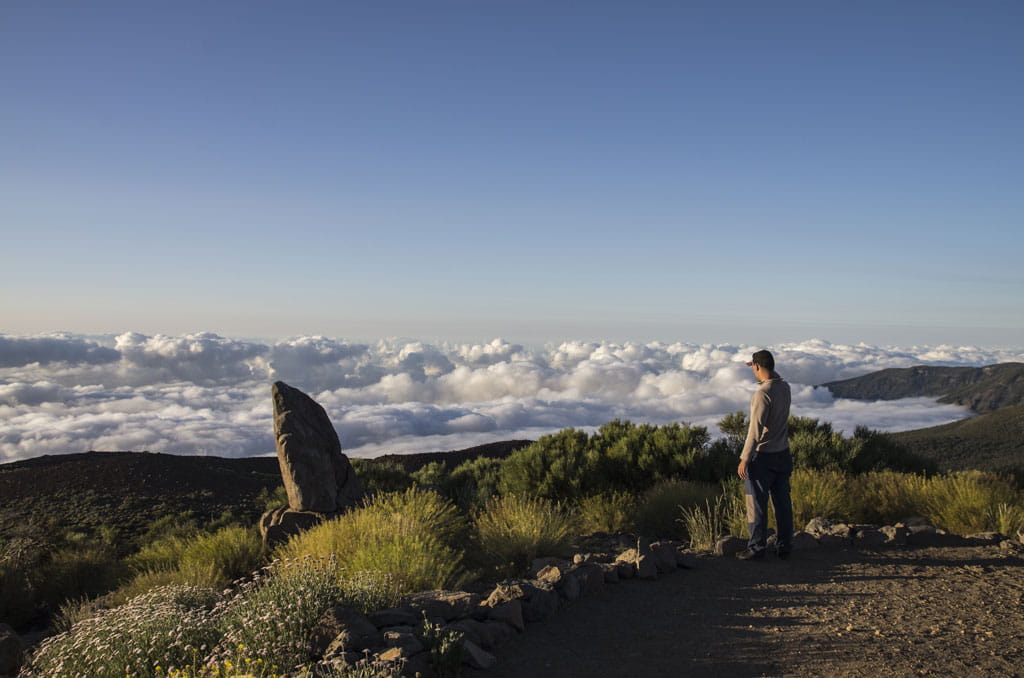
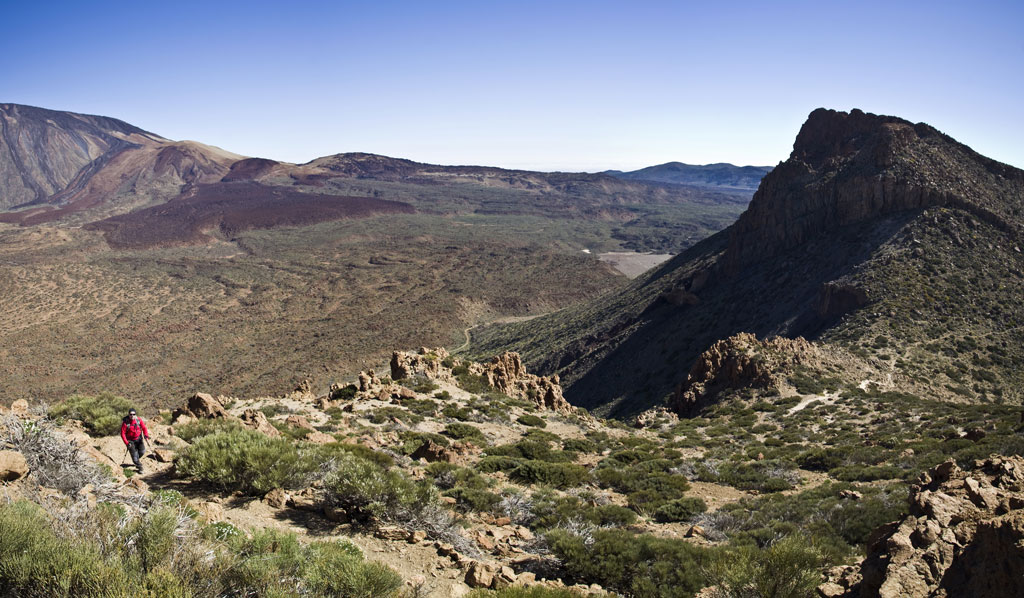
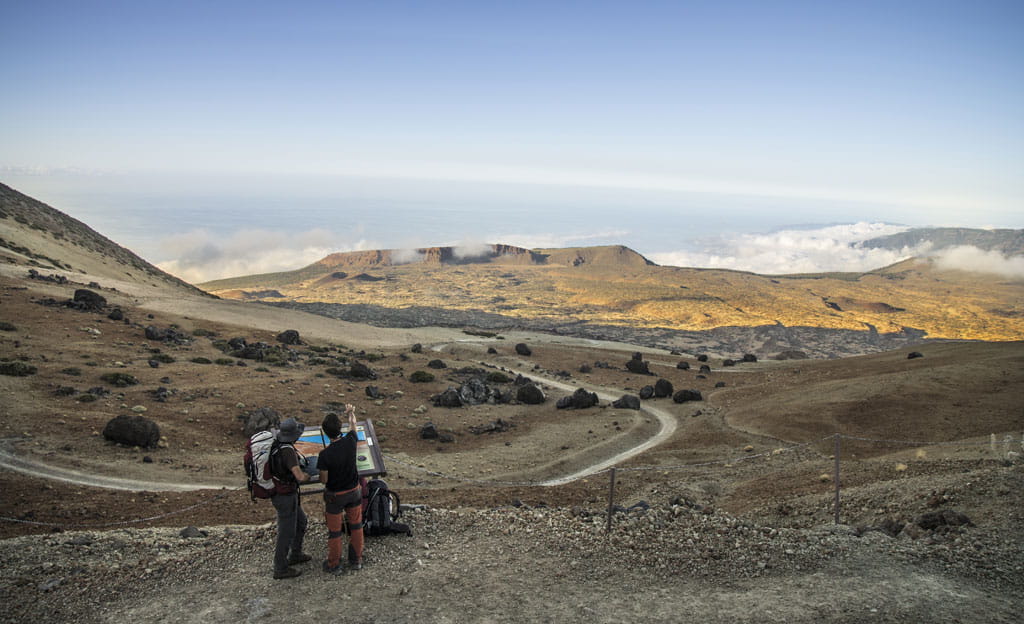
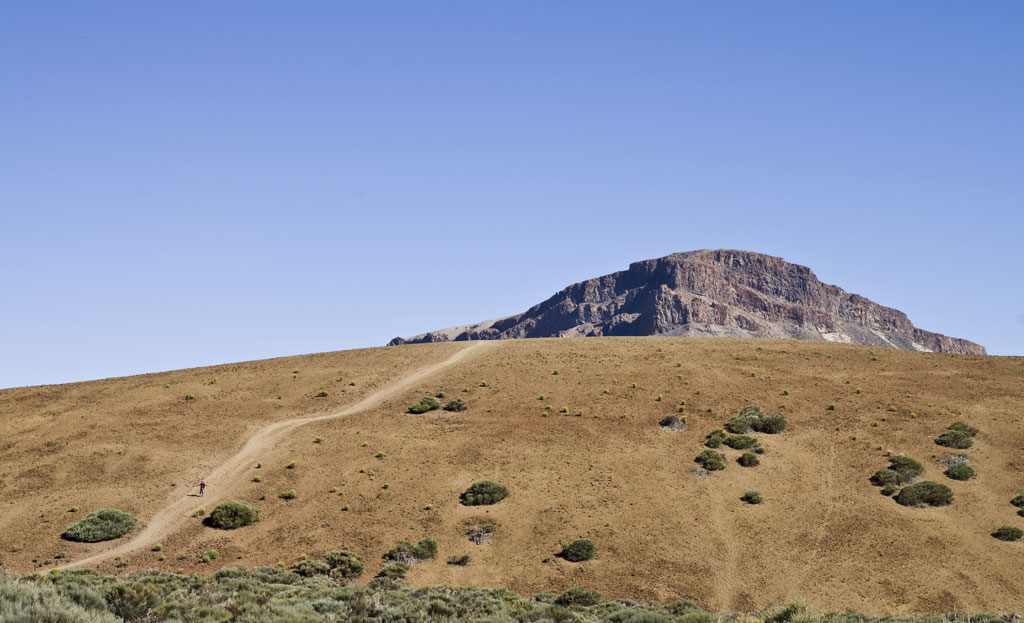
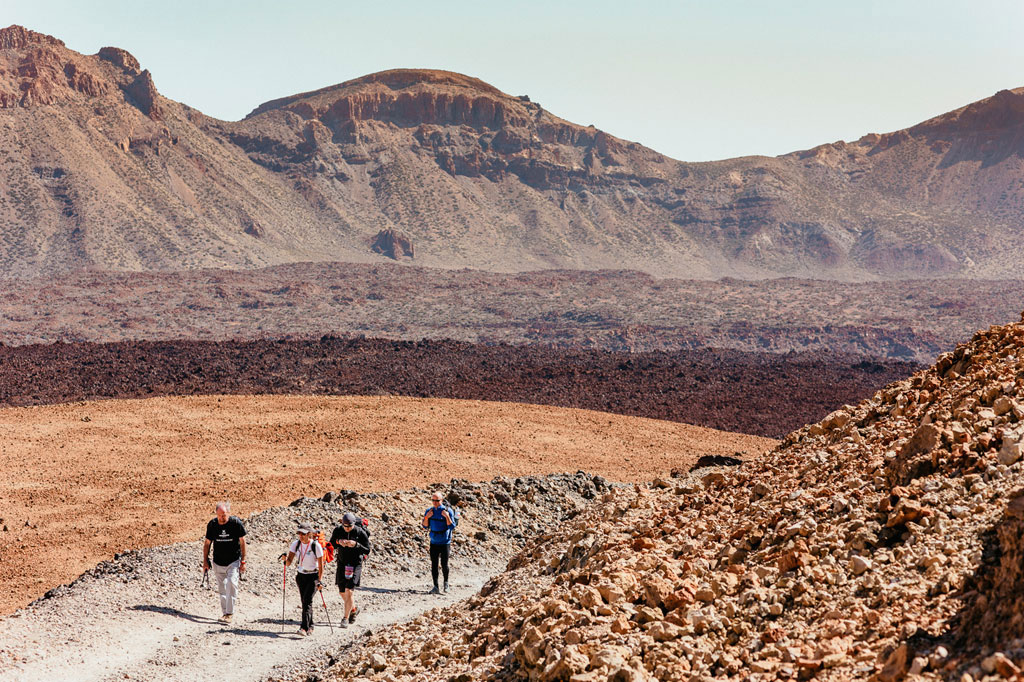
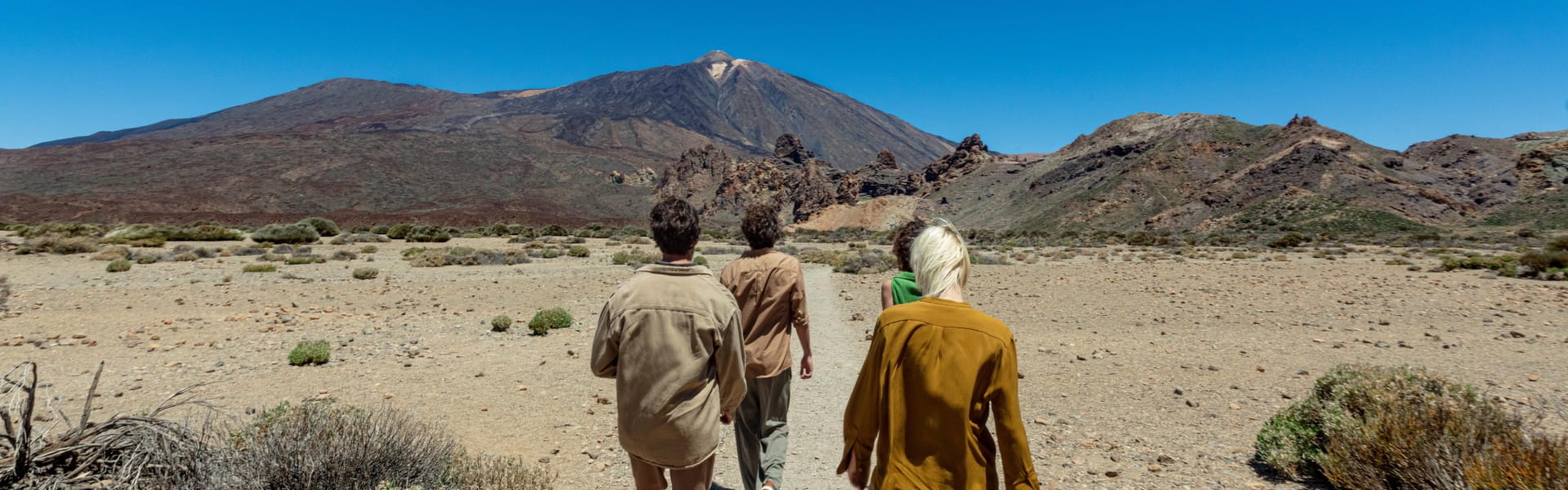
You simply must not miss this wonderful National Park. The other-worldly landscapes here will leave you speechless. The pure, clean air of Spain's highest peak will refresh your lungs as you wander amidst solid volcanic magma feeling almost insignificant in this impressive UNESCO World Heritage Site.
This is, without doubt, the icon of Tenerife. Teide National Park was declared a UNESCO World Heritage Site in 2007 under the Natural Asset category. It also boasts a European Diploma awarded by the European Council, and it is part of the Natura 2000 Network Sites. The Park is well deserving of such acknowledgements. Firstly, it boasts the broadest sample of supra-Mediterranean vegetation on Earth. Secondly, it covers one of the world's most stunning volcanic landscapes – and certainly the most outstanding in the Canary Islands.
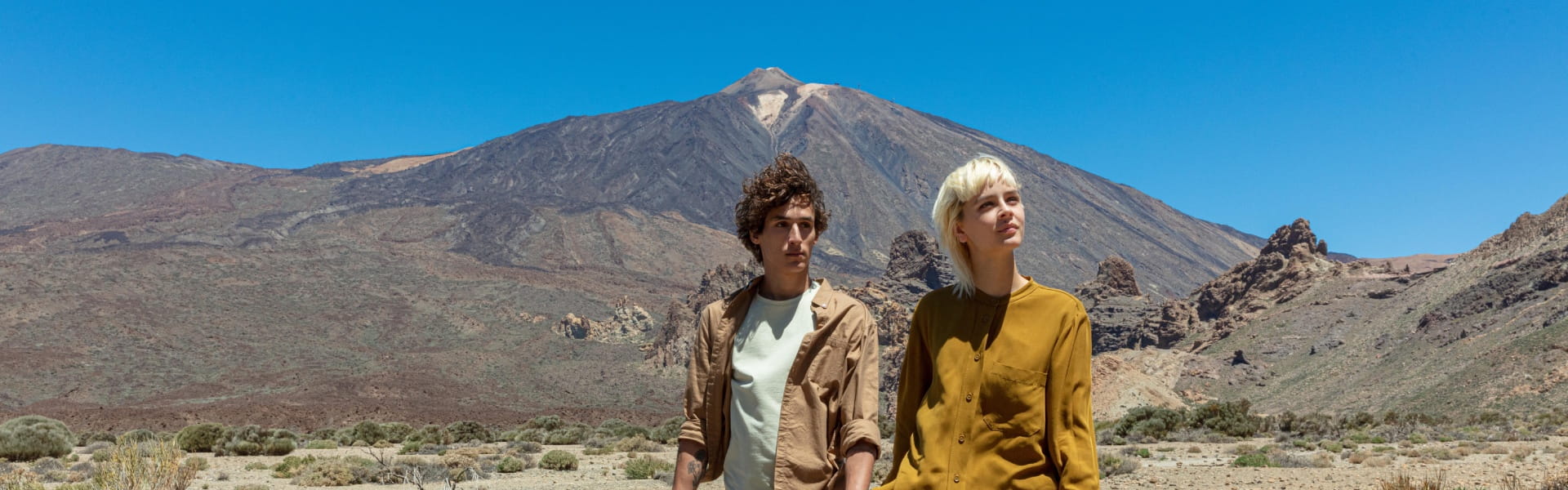
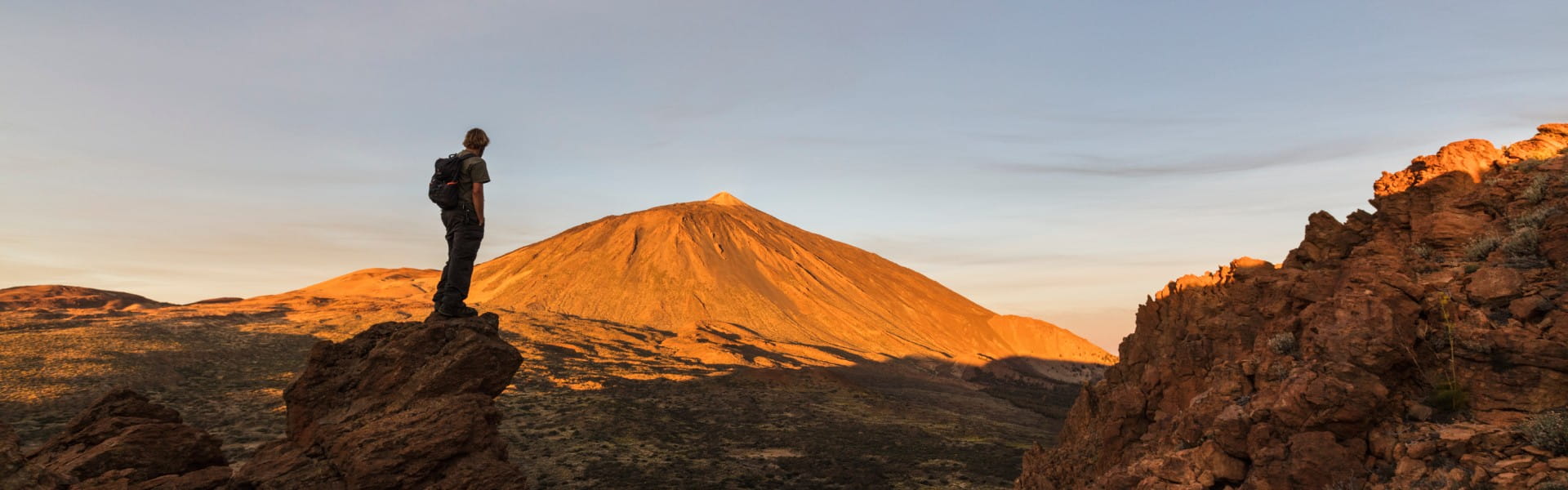
Teide National Park lies right in the middle of the Island, at an altitude of 2,000 m (6,500 ft) above sea level, topped by Spain's highest peak at 3,718 m (12,198 ft). These record-breaking figures add to the fact that it is the most visited national park in Europe, welcoming some three million visitors a year.
From a geomorphological point of view, this place is one of nature's true wonders. The structures of the caldera and the Teide-Pico Viejo stratovolcano are unique in the world. But its list of virtues does not stop there. With hundreds of cones, lava tongues and caves, it is the focus of much scientific and scenic interest. Not to mention its wealth of fauna and flora, which includes a significant array of endemic Canarian species and several others that only live in the Park.
Teide National Park was created in 1954 in recognition of its volcanic and biological singularity. Covering roughly 19,000 hectares (47,000 acres), it is the largest and oldest out of all the national parks in the Canary Islands. It has a peripheral protection area and is surrounded by Corona Forestal Natural Park, which covers an expanse of 46,612.9 hectares (115,183 acres), making this the largest protected nature area in the entire archipelago.
Getting here
-
By guagua (bus):
- From Puerto de la Cruz, line 348.
- From Costa Adeje, line 342.
-
By car:
- From the north along the TF-21 La Orotava-Granadilla road or along the TF-24 La Laguna-El Portillo road.
- From the south, along the TF-21 road.
- From the west, along the TF-38 Boca Tauce-Chío road.
What to see?
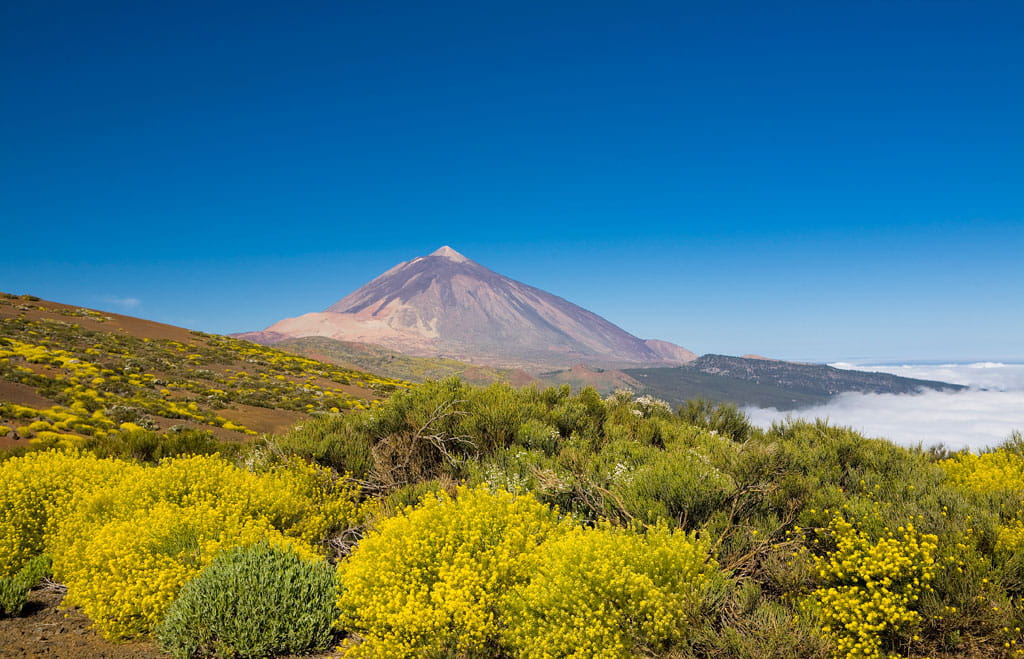
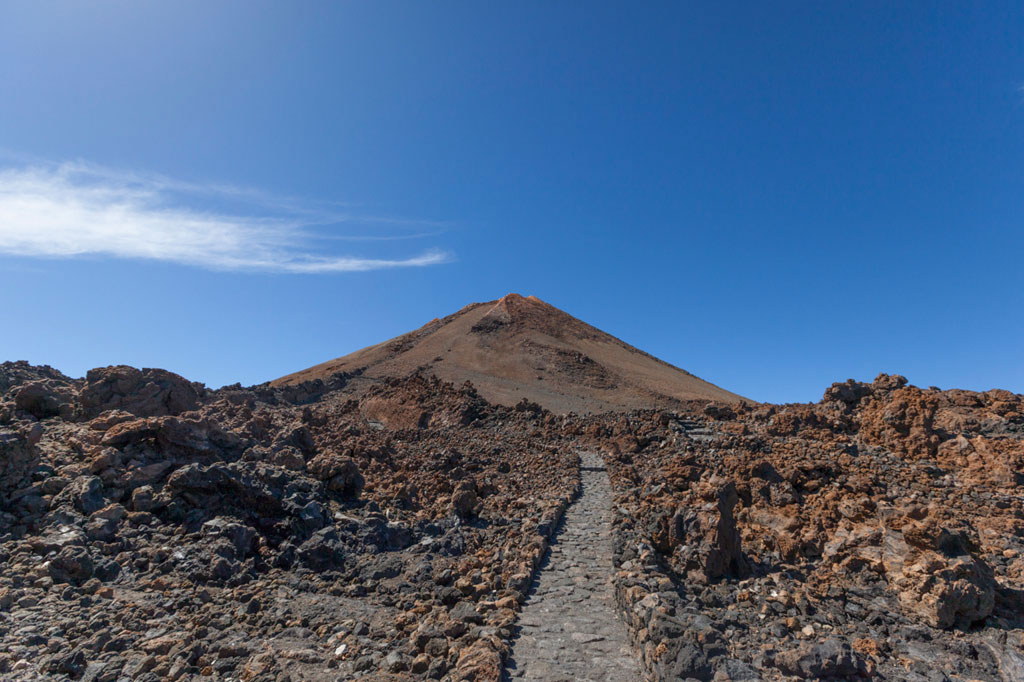
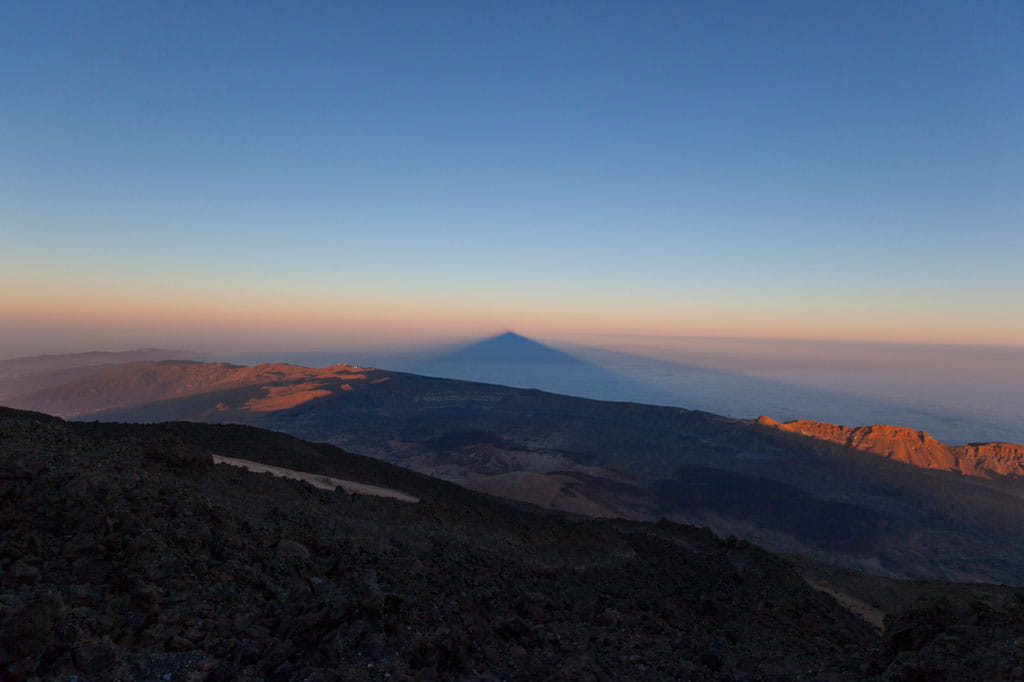
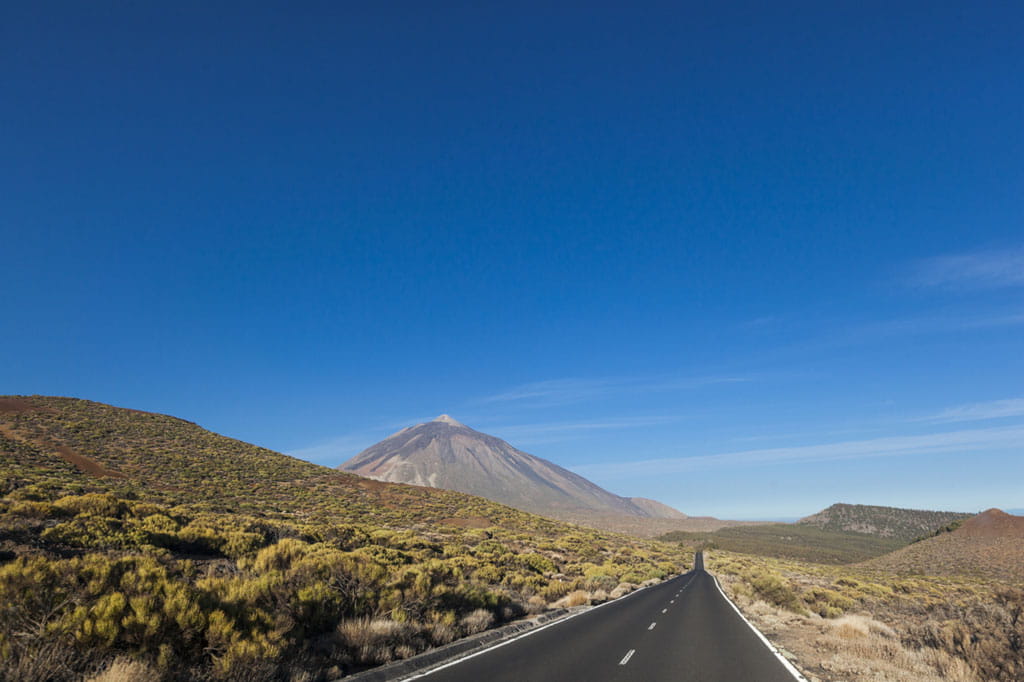
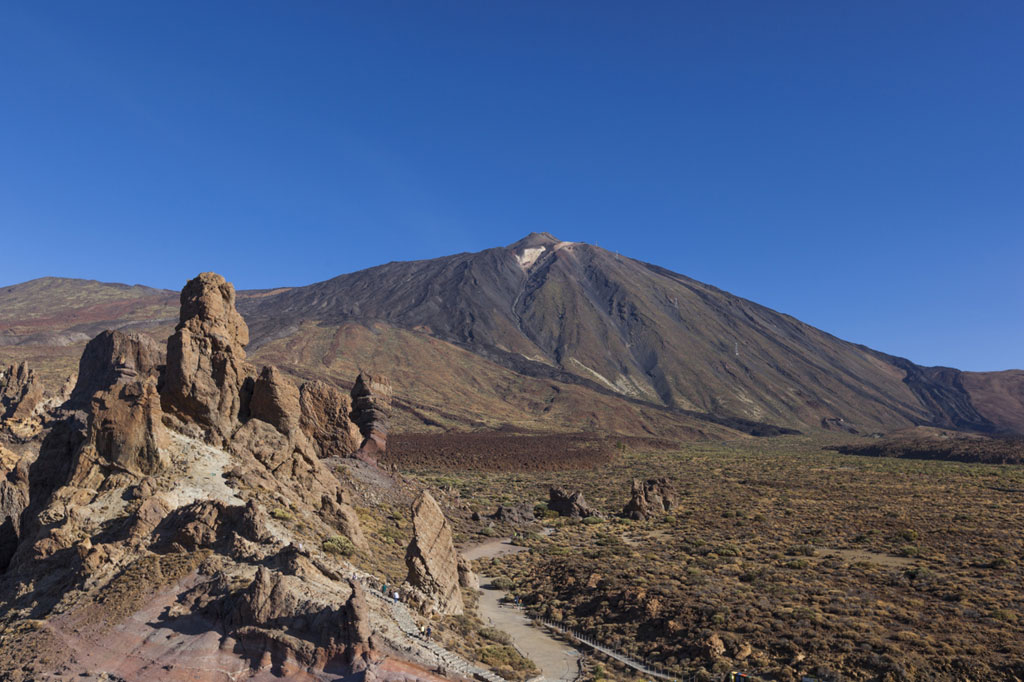
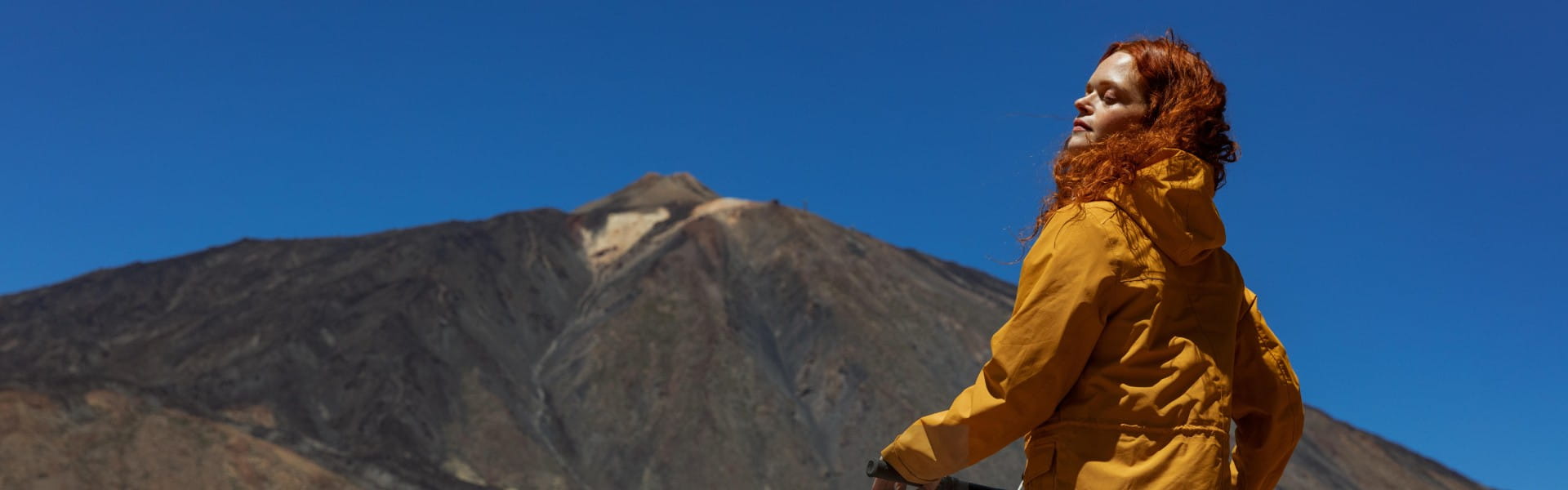
Even from the car, the park is a spectacular sight to see. The landscape is breathtaking from every angle. To explore it thoroughly, the best thing is to drive up on one road and down on another. The greatest contrast occurs if you enter from the north and exit towards the south or vice-versa. Cañadas del Teide is a gigantic caldera spanning 17 km (10.5 miles) across, from which the summits of Pico Viejo and Mount Teide rise up to 3,718 m (12,198 ft), making this Spain's highest point and the third tallest volcano in the world. Its snowy white peak contrasting with tongues of black lava petrified on the slopes is a unique combination that never fails to surprise.
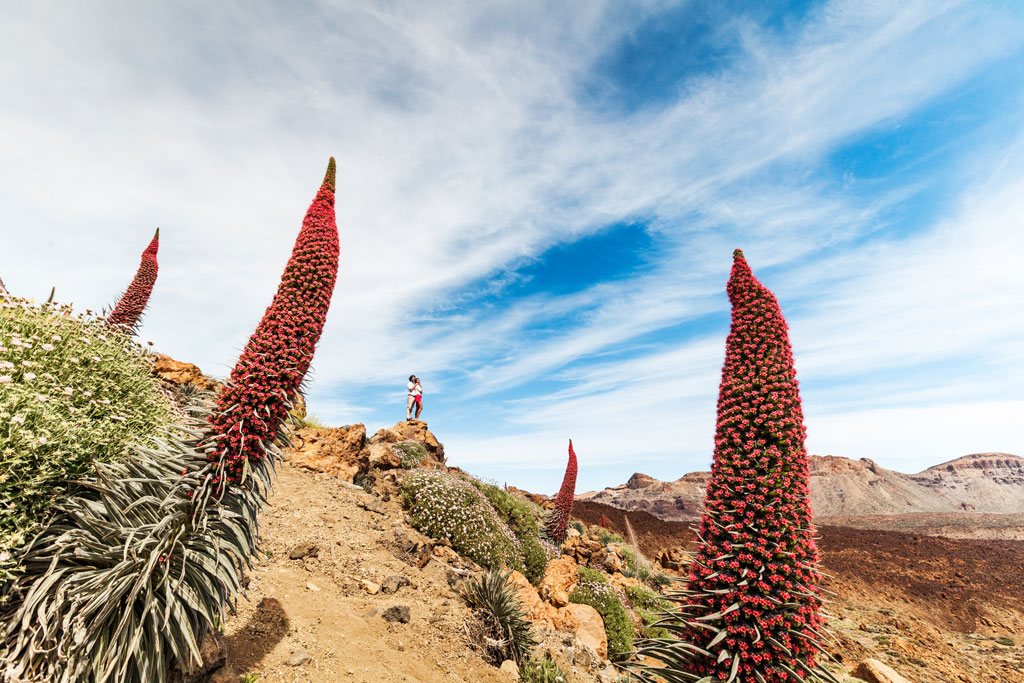
If you come in springtime, look out for the unmistakable colour of the red bugloss, a unique plant that can grow up to 3 m (9.8 ft) tall and bursts into bloom with thousands of tiny bright red flowers. Another of the world's unique treasures you will find here is the Teide violet, a proud symbol of the Park that grows only above altitudes of 2,500 m (8,200 ft). If you manage to see one, consider yourself extremely lucky.
If the landscape and vegetation seem taken from another planet, the fauna is no disappointment. Keep an eye out for the smallest of creatures. Most of the insects here cannot be found anywhere else. You will also come across unique reptiles, such as the Tenerife lizard, the Tenerife gecko and the Canarian lizard. For bird lovers, prepare to see kestrels, great grey shrikes and some endemic species such as blue chaffinches. There is also a mammal that is worthy of special mention, though it was introduced by man: the Corsican mouflon. Spotting one is quite a challenge, as they tend to hide from human view.
What to do?
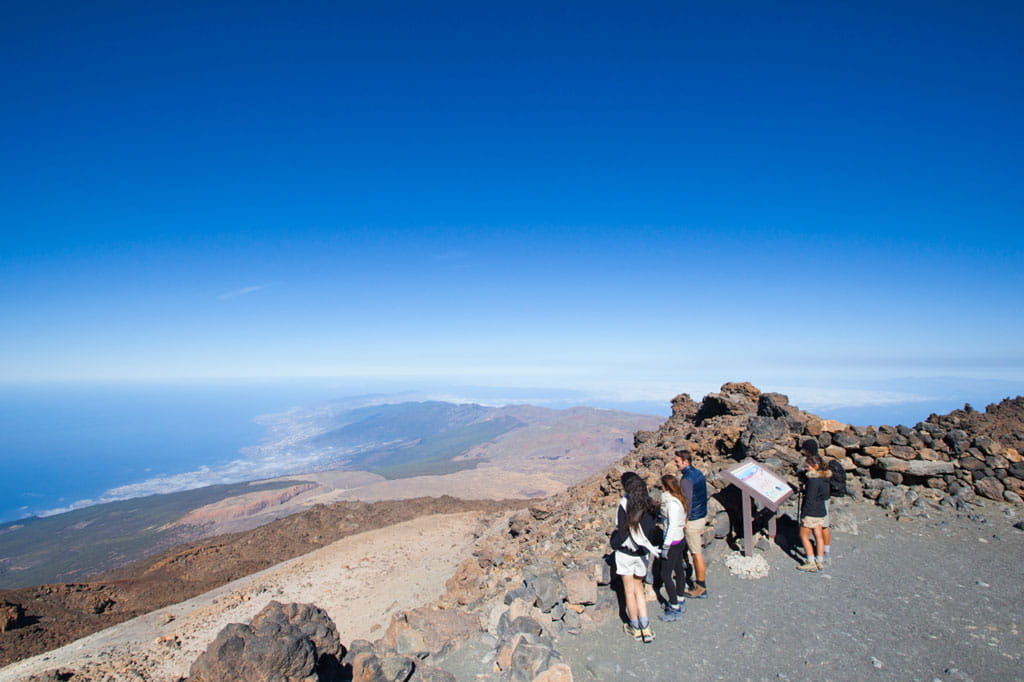
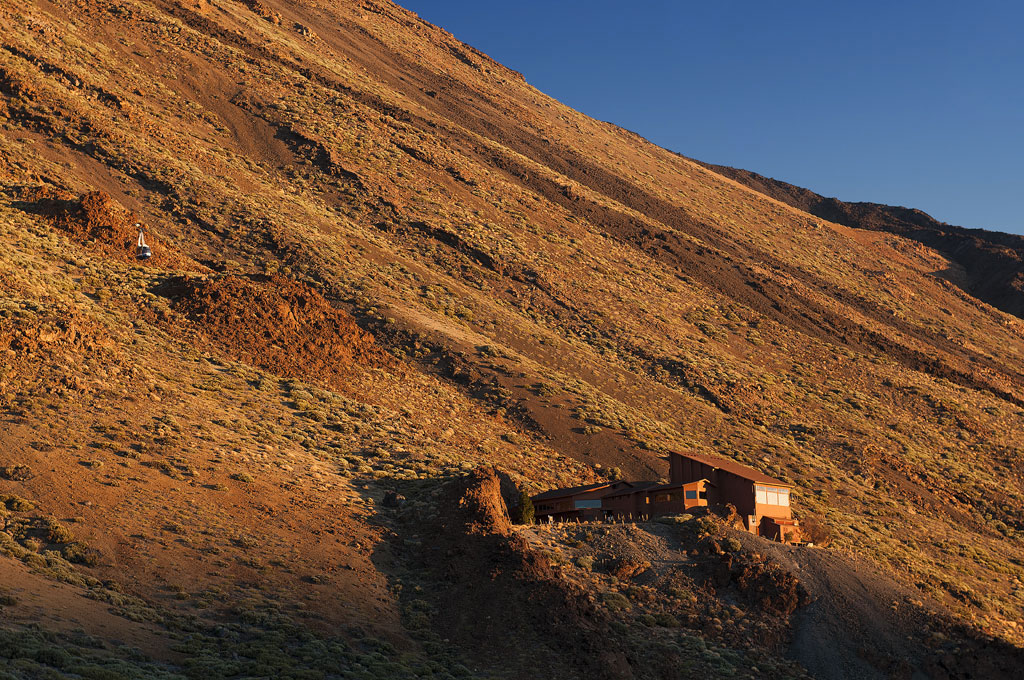
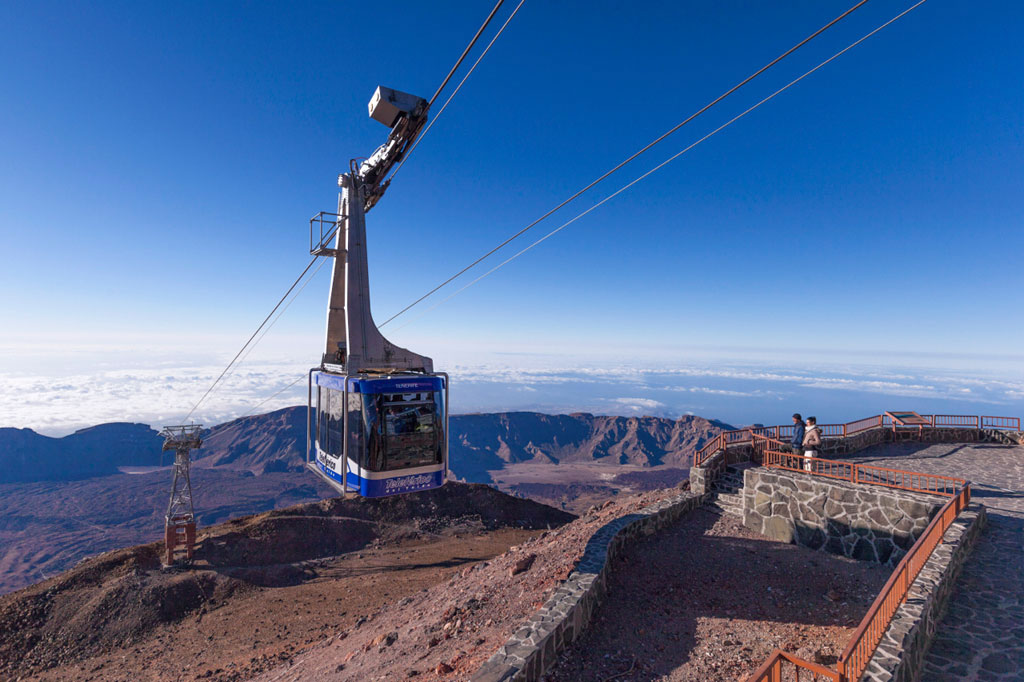
One of the most exciting experiences the National Park has in store for you is a ride on the cable car. The base station stands at an altitude of 2,356 m (7,729 ft) and climbs up to the top station at 3,555 m (11,663). The journey between the two takes roughly 8 minutes and the thrill is electrifying. Once at the top, you will be treated to some stunning views from the lookout point.
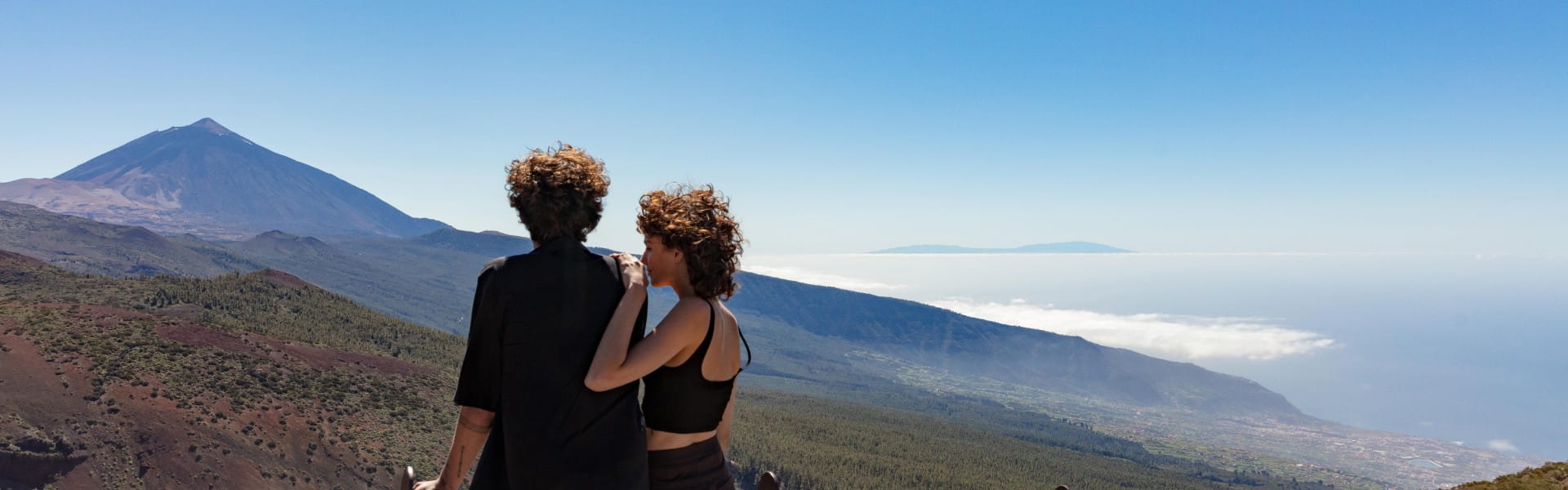
But even if you take the cable car to the top station, you still can't quite say you've made it to Spain's highest point. There is a trail from here that leads you up to the crater on foot. It takes roughly 40 minutes and is a difficult walk, but just think of the pride of telling your friends you have reached the top of the country on your own two feet. If you are lucky enough to go on a clear day, the view will bless you with the sight of up to four islands from atop the peak of this almighty mountain: Gran Canaria, La Palma, El Hierro and La Gomera, not to mention the entire island of Tenerife opening out at your feet to proudly reveal its full beauty. If you want to live this unforgettable experience, you will need to apply for a special licence which you can get from the website www.tenerifeon.es. We recommend you apply one or two months in advance, depending on the time of year. The licence is free but it will only be valid for the chosen date. If you can't make it up there because of the weather or any other circumstances, the licence will expire.
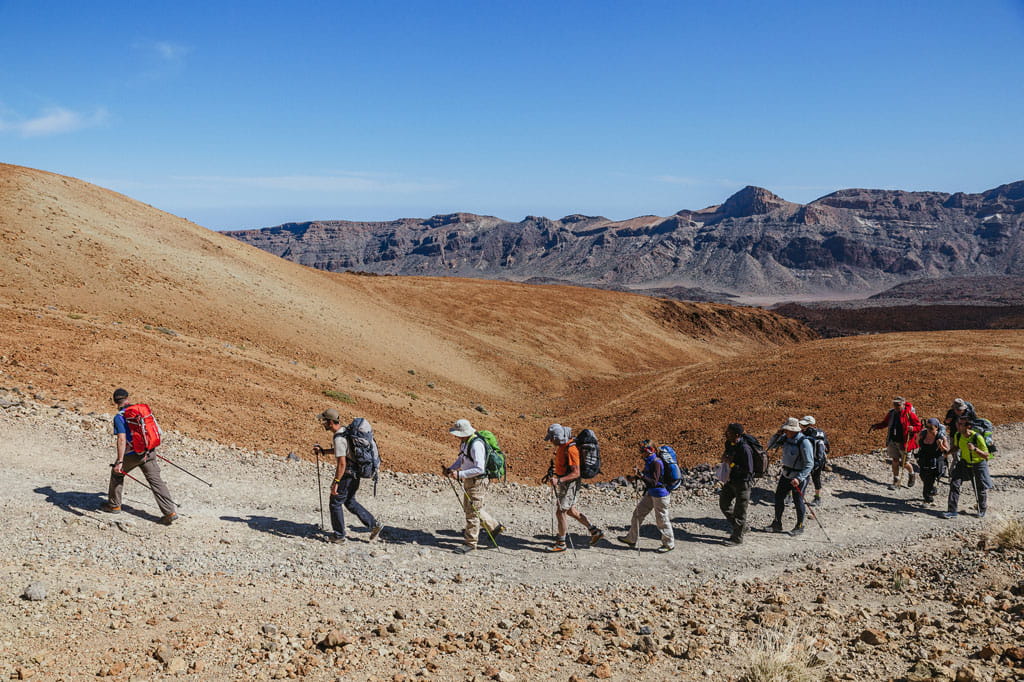
You will be able to feel at one with the National Park's wilderness thanks to a Network of Trails that lead you on self-guided walks of the area, unless you prefer to have an official guide (available all year round except on 1 and 6 January and 25 December). The walks are varied in terms of distance, duration and difficulty. If you decide to go for a guided walk, you will need to book at the National Park office from Monday to Friday, from 9 am to 2 pm, or alternatively call (+34) 922 92 23 71, write an email to teide.maot@gobiernodecanarias.org or go to one of the National Park's Visitor Centres.
The following guided walks set off from the El Portillo office:
- Arenas Negras 2 h. - 2 h. 30 min.
- La Fortaleza 3 h. 30 min.
- Risco Verde 3 h.
Departures at 9.15 am and 1.30 pm (except the La Fortaleza trail, with just one departure first-thing).
There are also guided walks from the Cañada Blanca Visitor Centre:
- Roques de García 2 h. - 2 h. 30 min.
- Degollada de Guajara 3 h. 30 min.
- Guajara 5-6 h.
Departures for the first walk are at 9.15 am and 1.30 pm (the other two are just once a day at 9.30 am).
There is another walk that sets off from both points:
- Siete Cañadas (one-way) 4-5 h.
Departures at 9.15 am or at 9.30 am.
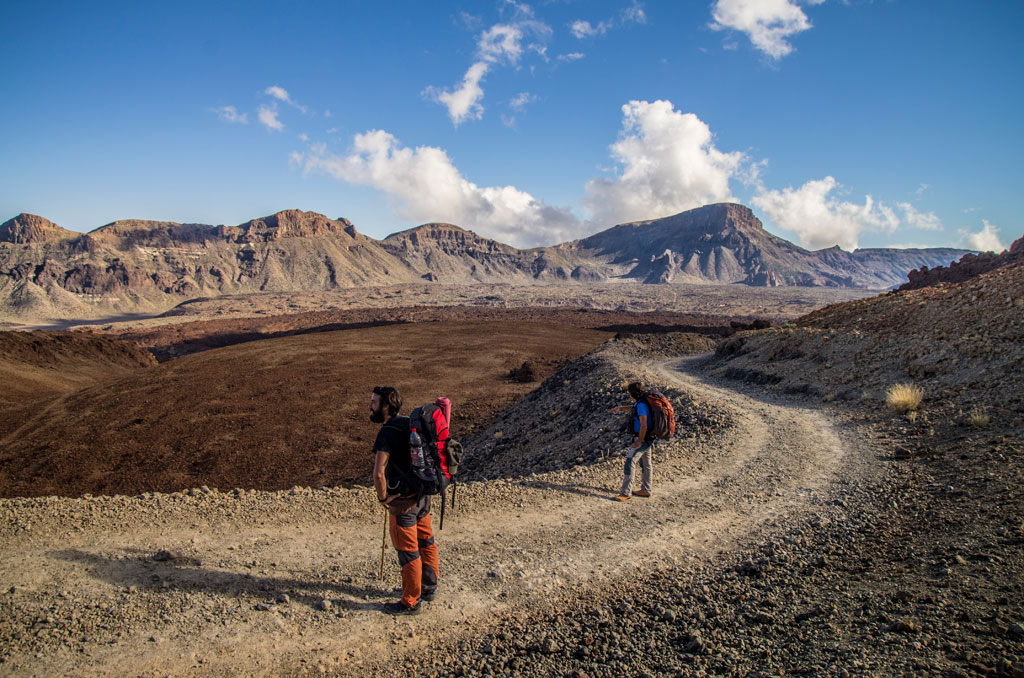
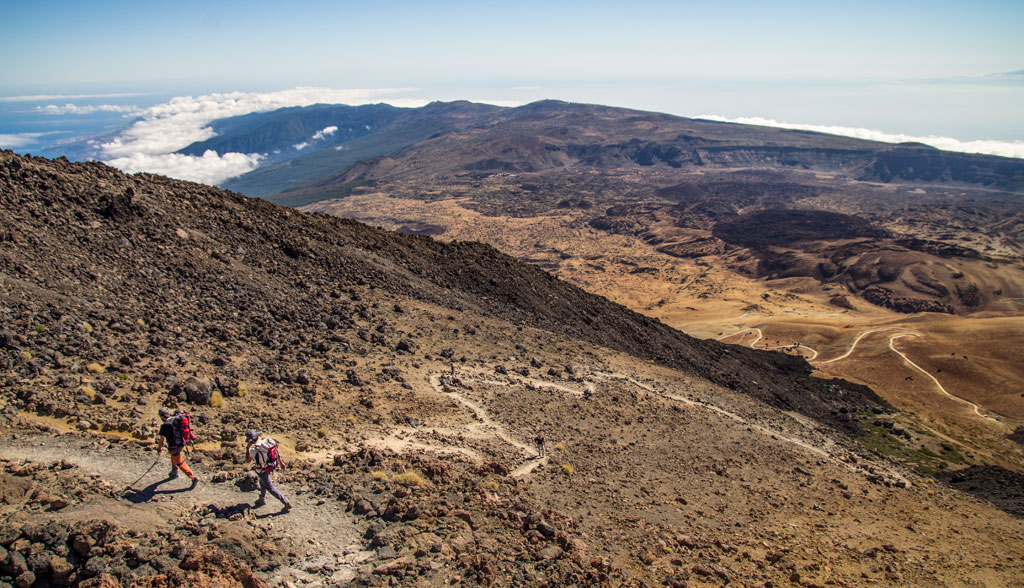
If you decide to take the walk at your own pace, indulge in the silence and feel how small you are compared to the vastness all around you, you will find that this trail is perfectly marked and signposted. In any case, the office and the visitor centres will provide you with any further information you might need.
Few places in the world boast such an extraordinary landscape and state-of-the-art science facilities together. The IAC (Canarian Institute of Astrophysics) is equipped with some of the world's most important facilities. To visit them and get a close-up of the secrets of the universe, contact the company Volcano Life, providing guided tours in Spanish, English and German. You will need to book in advance by calling (+34) 637 365 429 or emailing reservas@volcanolife.com You can also visit the website volcanolife.com If a visit to the National Park made you feel small, prepare to venture into the cosmos and discover the true dimensions of the great beyond.
This observatory was located in Tenerife because, together with La Palma, Chile and Hawaii, its skies are among the best in the world for stargazing. There is a regional law under the rather poetic name of the Sky Law which controls light pollution levels and prevents “progress” from depriving Tenerife's residents of one of nature's simple pleasures: gazing up at the star-studded sky. Plus, the Island has been awarded the International Starlight Destination certificate. There are institutions and companies who specialise in “star tourism” and provide information and guided tours. For more detailed information, go to the “Stargazing” section.
As you know, the wonders of the Park are not only in the sky – the ground is full of them too. Beside the El Portillo Visitor Centre are the Botanical Gardens, where you will be able to see plant species from the Canary Islands' mountain-top vegetation which are rarely spotted in their natural habitat, and many of them are endemic to the Park or the Island.
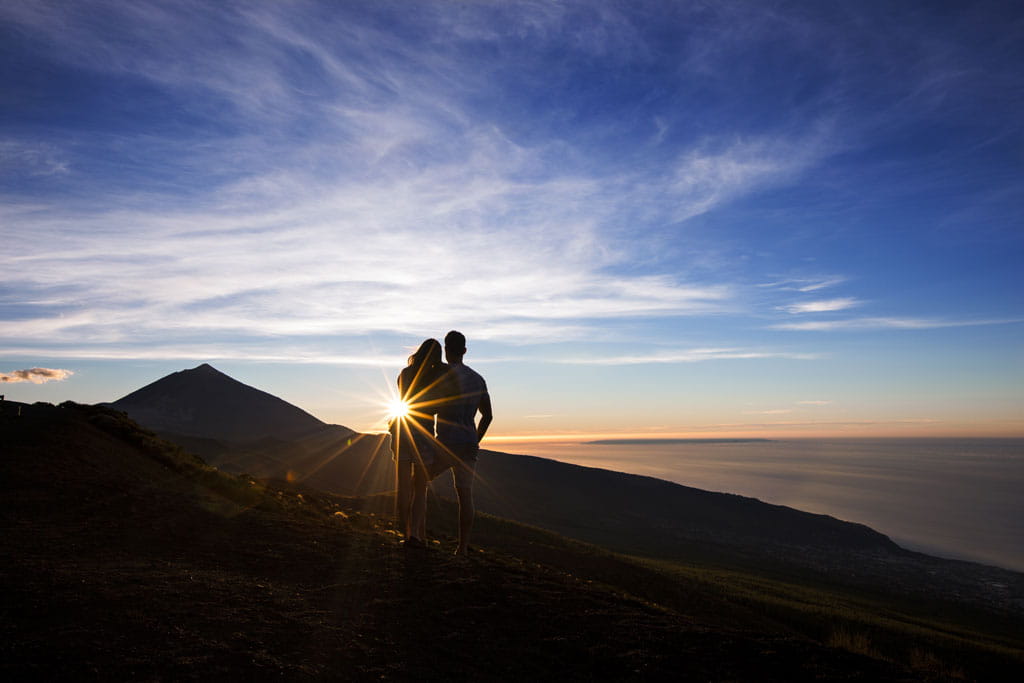
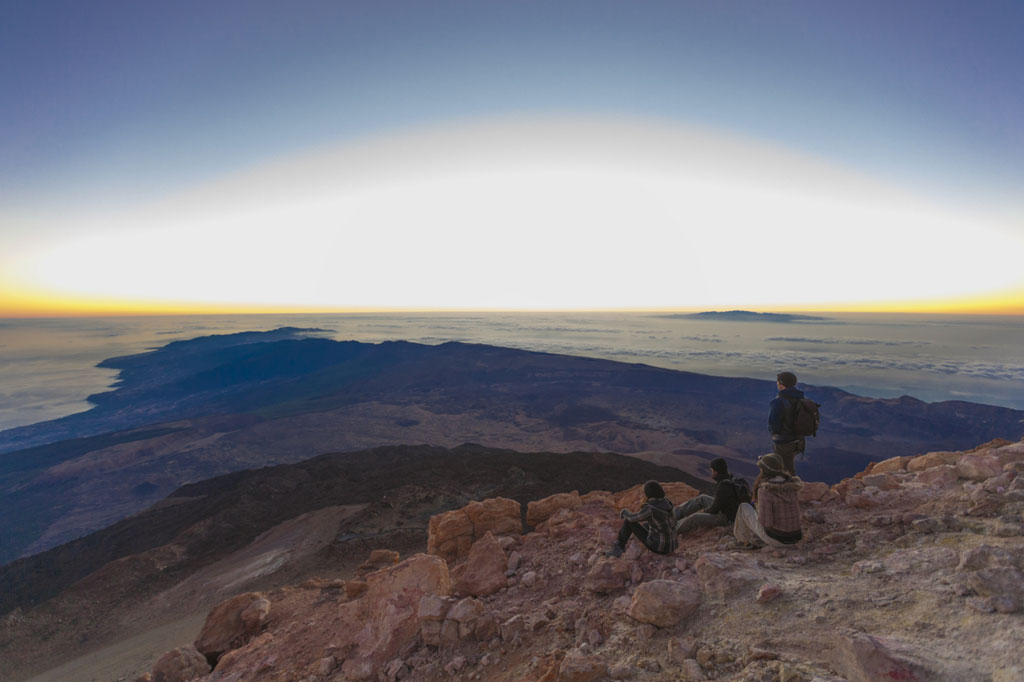
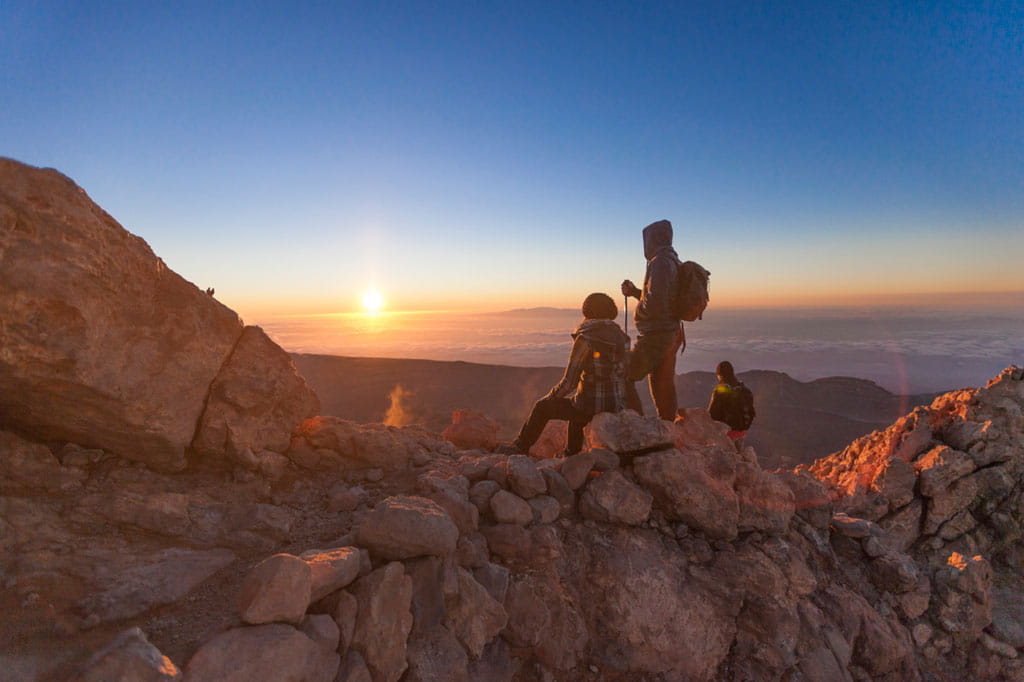
If you want to get even closer to nature, we recommend you spend a night at the Altavista Refuge. Located at an altitude of 3,270 m (10,730 ft), a stay here is an experience in itself, but you are only allowed one night. Usually, people stay here to make an early climb up to the peak without a licence, to get that unforgettable view at sunrise. At the refuge, guests are given bed sheets and can heat up liquids in the kitchen. Prices range from 10 to 20 euros and the only way to book is on the net: telefericoteide.com/altavista.
Lastly, the National Park has two Visitor Centres that open all year round (except on 25 December and 1 January). On the one hand, the El Portillo Visitor Centre shows the Park's geological history and the relationship between the beings that inhabit the area and their surroundings. On the other hand, the Cañada Blanca Visitor Centre focuses on the interaction between mankind, Las Cañadas and Mount Teide. Both open from 9 am to 4 pm.
What to take?
Up in the mountains, any form of exercise becomes exhausting after a while, so make sure you pace yourself to avoid wearing yourself out too soon. Take water or an isotonic drink with you, as well as energy foods such as fruit or nuts. Wear suitable footwear for the loose and stony mountain ground you will be walking on. Take extra care in winter, especially in the event of snowfall. In Summer, don't forget that solar radiation is particularly strong here and can cause serious sunburn, so we suggest you wear sun screen and a hat. In any case, it is a good idea to take some warm clothing and a raincoat whatever the time of year because the weather can turn suddenly. Last but not least, be sure to put your phone in your backpack.
What not to take?
Stones. You may find it extremely tempting to pocket a few volcanic stones with interesting shapes, but this is seriously harmful for the landscape and is completely forbidden. Remember, the best souvenir is the one you take back in your memory and your heart.
You may be interested in
Tenerife On
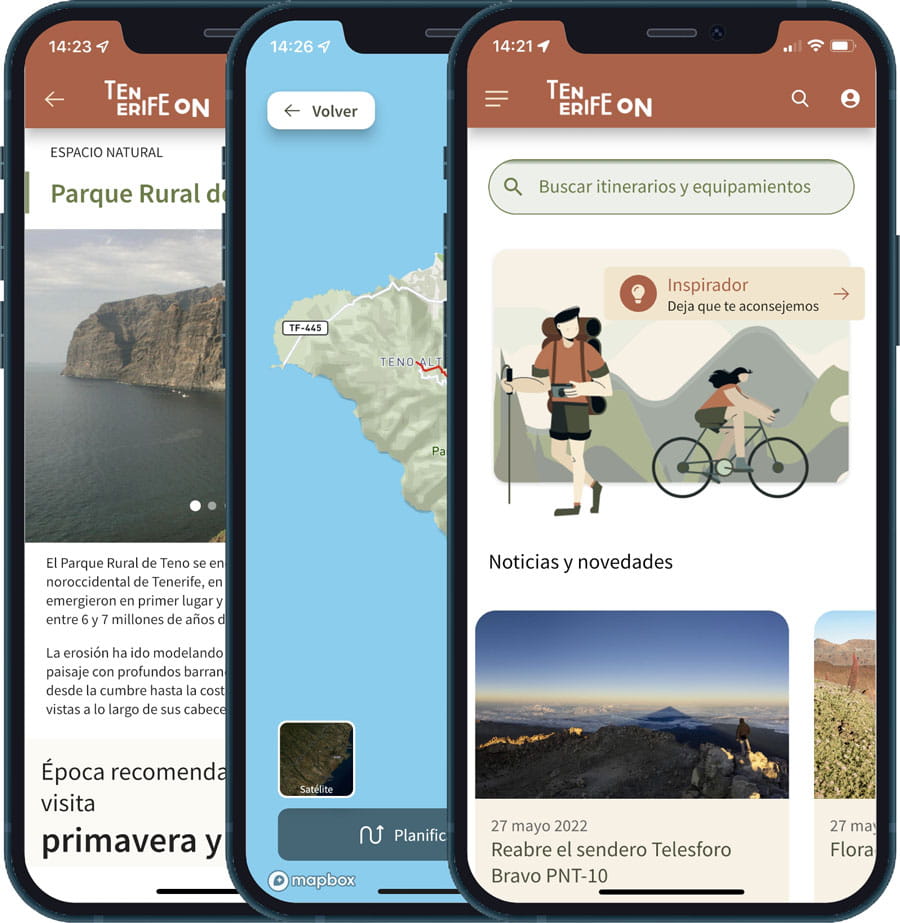
Download the App. And take with you on your trip all the up-to-date information and recommendations that Tenerife ON has compiled just for you. Plan your trip, download the route, explore the surroundings and check the latest news wherever you a.

We answer to your frequently asked questions
Everything you need to know about Teide National Park
What is Teide National Park and why is it one of the most special places in Tenerife?
Teide National Park is one of the most important natural areas in the Canary Islands and one of the most striking volcanic landscapes in Europe. Located in the centre of Tenerife, it protects an area of approximately 18,990 hectares made up of craters, lava flows, volcanoes, rock formations and ecosystems adapted to unique conditions, with one-of-a-kind flora and fauna. Within it stands Mount Teide, which at 3,715 metres is the highest peak in Spain and one of the country’s great natural symbols. This combination of altitude, volcanic origin and scenic richness makes the park a destination unlike other protected areas: here you can walk through surroundings reminiscent of other planets, discover exceptional geology and enjoy one of the best places in the world for stargazing. Teide National Park also offers experiences for all kinds of travellers, from easy routes and accessible viewpoints to more challenging trails for those seeking a high-mountain trekking experience. The main aims of Teide National Park are to conserve this natural heritage, protect its geological and landscape values, encourage scientific research and raise awareness of the importance of its ecosystems. The park also seeks to balance environmental conservation with responsible tourism, giving travellers the chance to discover this unique place without compromising its protection for future generations.
What is the history of Teide National Park and why is it a World Heritage Site?
The history of Teide National Park is closely linked to the volcanic origin of Tenerife and to the relationship the island’s inhabitants have had with this mountain for centuries. Long before it became a protected area, Teide already held great cultural value for Tenerife’s ancient inhabitants, the Guanches, and its presence dominated both the landscape and life on the island. Scientific interest in the area began to grow with the arrival of travellers, naturalists and explorers who studied its volcanic formations, its geology and its unique conditions. This importance led to Teide being officially declared a National Park on 22 January 1954, with the aim of preserving one of the most remarkable volcanic landscapes in Spain. In 2007, UNESCO recognised the park’s outstanding value by declaring it a World Heritage Site. This recognition is due to the importance of its volcanic structures, such as calderas, cones, lava flows and rock formations, which represent one of the finest examples in the world of geological evolution associated with large volcanoes. Today, Teide National Park is one of the most important protected natural areas in Spain and an international benchmark for its combination of volcanic landscape, scientific research, conservation and the promotion of natural heritage.
Where is Teide National Park?
Teide National Park is located in the centre of the island of Tenerife, within the area known as Las Cañadas del Teide, a vast volcanic caldera lying at more than 2,000 metres above sea level. It covers part of the territory of several of the island’s municipalities, including La Orotava, one of the best-known access points from the north of Tenerife. Its location means the park can be reached from almost anywhere on the island in just over an hour, although the distance and journey time vary depending on where you set off from. Along the way, the landscape changes gradually from the coastal areas to Canary pine forests and, finally, to the high-mountain volcanic terrain that characterises Teide. Approximate distances and journey times to Teide National Park Distances to Teide National Park depend on the access route chosen and the starting point. As a guide:
- From Santa Cruz de Tenerife: around 55-60 km (34-37 miles), approximately 1 hour 15 minutes by car.
- From San Cristóbal de La Laguna: around 45-50 km (28-31 miles), a journey of about 1 hour by car.
- From La Orotava: around 30 km (19 miles) to the El Portillo area, one of the park’s main entrances, approximately 45-50 minutes.
- From Puerto de la Cruz: around 35-40 km (22-25 miles), a journey of approximately 1 hour 15 minutes, following the road through La Orotava.
- From Los Cristianos: around 50-55 km (31-34 miles), approximately 1 hour 15 minutes.
- From Costa Adeje: around 55-60 km (34-37 miles), a journey of about 1 hour 20 minutes.
- From Tenerife North Airport (Los Rodeos): around 40-45 km (25-28 miles), approximately 1 hour.
- From Tenerife South Airport (Reina Sofía): around 45-50 km (28-31 miles), a journey of approximately 1 hour.
Bear in mind that Teide National Park is a high-mountain area and the access roads have bends and steep gradients. So even though the distances are not great, it is worth allowing a little extra time to enjoy the drive and stop at the various viewpoints.
How to get to Teide National Park?
To reach Teide National Park, you have several transport options depending on your preferences and the type of visit you want to make:
Getting to Teide National Park by car The car is one of the most convenient ways to visit Teide National Park, as it allows you to explore the protected area freely and stop at iconic spots such as the Roques de García, the Llano de Ucanca or some of its panoramic viewpoints. The main road access routes are:
- From the north of Tenerife: via the TF-21, which links La Orotava with Las Cañadas del Teide. It is one of the most popular routes and lets you enjoy a gradual change of scenery, from the Orotava Valley to the volcanic landscape.
- From Santa Cruz de Tenerife and La Laguna: via the TF-24, known as the La Esperanza road, which crosses a forested area before joining the park at El Portillo.
- From the south of the island: via the TF-21 from Vilaflor, one of the highest villages in the Canary Islands.
- From the west: via the TF-38 from Chío, connecting with the Boca Tauce area.
Visiting Teide by car is a good option for those who want to take a scenic route, travel with children or combine several stops without depending on timetables. Getting to Teide by guagua (bus) It is also possible to reach Teide National Park by public transport, although connections are more limited than by car and the visit needs to be planned in advance. The main bus lines serving the park area are:
- TITSA Line 348: connects Puerto de la Cruz with Las Cañadas del Teide, via La Orotava and El Portillo. The full journey takes approximately 1 hour 40 minutes.
- TITSA Line 342: connects Costa Adeje with Teide National Park, with stops in places such as Los Cristianos and Vilaflor. The journey can take around 2 hours, depending on the starting point.
These lines provide access to areas close to the Teide Cable Car, the Parador Nacional and other points of interest in the park. As services are infrequent, it is advisable to check the timetables before organising your trip and to plan both the outward and return journeys carefully. Getting to Teide by bike For travellers looking for a more active experience, it is also possible to cycle up to Teide National Park. The climb to the volcano is one of the best-known cycling challenges in Tenerife because of its length, elevation gain and changing scenery. The most common routes start from towns such as La Orotava, Puerto de la Cruz, Santa Cruz de Tenerife or Vilaflor, although they are demanding rides due to the continuous gradient and the final altitude, which exceeds 2,000 metres in many parts of the park. Cycling up offers a unique transformation of landscape: from the green mid-altitude areas to the high-mountain volcanic terrain, where the geological forms that make Teide one of the most remarkable natural areas in Spain appear. Before attempting this route, it is advisable to assess your fitness, check the weather conditions and carry enough water, sun protection and suitable clothing, as the temperature can change considerably during the climb.
What makes Teide National Park different from other national parks?
The main distinguishing feature of Teide National Park is that it offers a volcanic, high-mountain nature experience that is hard to find in other national parks in Spain. While other protected areas stand out for their forests, wetlands or coastal ecosystems, Teide lets you explore a landscape formed by volcanoes, solidified lava, vast expanses of volcanic rock and geological formations created over thousands of years of volcanic activity. Its great appeal lies in the combination of several unique elements: it is home to the highest mountain in Spain, it has some of the clearest skies in the world for astronomical observation and it offers hiking routes with an enormous variety of landscapes. That is why it is especially recommended for travellers looking for trekking, nature excursions or a different kind of experience during their visit to Tenerife.
Where does the name Teide come from and what mythology surrounds the volcano?
The origin of the name Teide is linked to the ancient beliefs of Tenerife’s aboriginal inhabitants, the Guanches. For them, this enormous volcanic mountain had deep spiritual significance and was considered a place inhabited by supernatural forces. One of the best-known legends tells of Guayota, a figure associated with evil who, according to Guanche mythology, lived inside the volcano. According to this tradition, when Teide became active, its eruptions were interpreted as a manifestation of this being. Beyond the legends, Teide has always been a cultural and geographical landmark for the island. Its presence has shaped Tenerife’s identity for centuries and today it remains one of the most recognisable natural symbols of the Canary Islands.
When is the best time to visit Teide and avoid the crowds?
The best time to visit Teide National Park depends on the kind of experience each traveller is looking for, although spring and autumn are usually the most recommended periods thanks to their pleasant temperatures, good visibility and fewer visitors than in the peak summer months. If you want to avoid the crowds, it is best to plan your visit outside the busiest periods, such as July and August, Easter, long weekends and public holidays. At these times, the main viewpoints, car parks and tourist facilities can be busier, especially during the middle of the day. To enjoy Teide more peacefully, a good option is to go first thing in the morning or late in the afternoon, when there are usually fewer people and the light makes for a particularly appealing experience of the volcanic landscape. Sunrise and sunset also bring unique colours and contrasts to Las Cañadas del Teide. Each season offers a different experience:
- Spring: one of the best times for walking the trails, with mild temperatures and the chance to see species such as the red tajinaste in bloom.
- Summer: offers longer days and clear skies, although it is the season with the most visitors.
- Autumn: combines good weather conditions with a quieter atmosphere.
- Winter: lets you enjoy a different landscape, especially after snowfall, although some routes or access roads may be affected by ice or weather conditions.
At any time of year, we recommend checking the weather in Teide National Park before your visit and planning your route according to mountain conditions. The altitude makes the weather more changeable than on the coast, even when other parts of Tenerife are enjoying a sunny, warm day.
What to see in Teide National Park on a first visit?
Teide National Park offers one of the most striking natural landscapes in Tenerife, so a first visit lets you discover much more than the volcano itself. Its roads and trails cross volcanic terrain with geological formations, viewpoints and iconic sites that reveal the sheer scale of this protected area. Among the must-see spots in Teide National Park are:
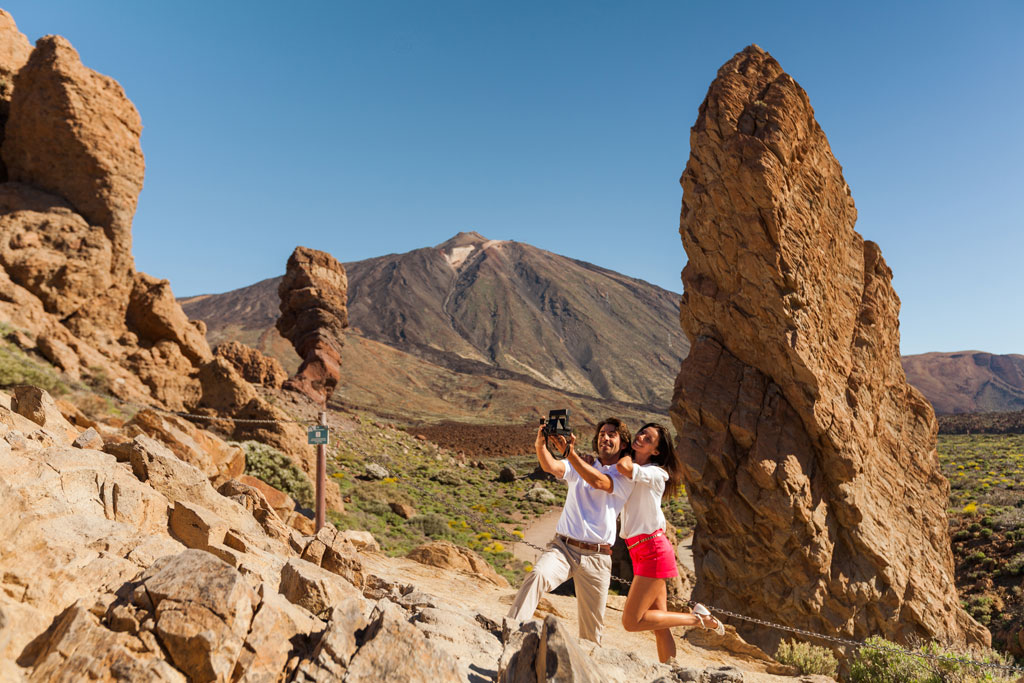
- Los Roques de García, one of the park’s best-known images
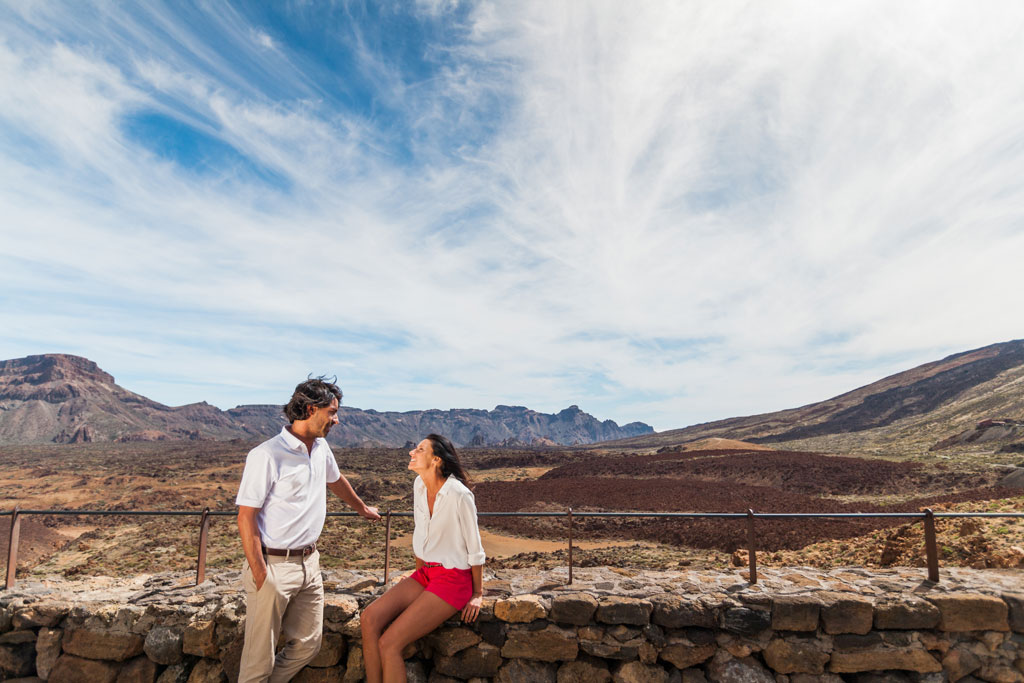
- El Llano de Ucanca, a vast volcanic plain with spectacular views of Teide
- The Minas de San José area, with its curious pumice stone formations
- The various Teide viewpoints, from which you can take in Las Cañadas and other volcanoes of Tenerife.
It is also worth stopping at the park’s visitor centres to learn more about its geological history, the formation of the island and the species that have adapted to this high-mountain environment. The variety of landscapes means that each area of the park offers a different experience.
How much time do you need to visit Teide?
The time needed to visit Teide depends on the kind of experience each traveller is looking for. A basic visit by road, with a few stops at the main viewpoints, can be done in about 3 or 4 hours, although it is advisable to set aside at least half a day to enjoy the scenery at a relaxed pace. If you want to get to know Teide National Park better, do a hiking route, visit the Cable Car area or enjoy its viewpoints, it is best to allow a full day. Many day trips from other parts of Tenerife are designed precisely to explore the park without rushing. If you are looking for a more complete experience, you can also combine your visit with activities such as stargazing, trekking routes or a sunset visit, one of the most special times thanks to the light that bathes the volcanic landscape.
What activities can you do in Teide National Park?
Teide National Park offers activities for different types of travellers, whether you are looking for a relaxed visit or want to enjoy a more active experience in nature. The most popular activities are:
- Hiking, as the park has an extensive network of paths that let you discover ancient volcanoes, lava flows and landscapes of great geological value.
- It is also an exceptional place for stargazing, thanks to the quality of its sky and the low light pollution. Tenerife is also home to the Teide Observatory, one of the leading centres for astronomical research, set in an ideal location for studying the sky thanks to its atmospheric conditions and high altitude.
- Wildlife and plant watching, an ideal activity for those who want to discover Teide’s unique biodiversity. While exploring the park, you can see species adapted to the extreme conditions of the volcanic high mountains, such as the red tajinaste, the Teide violet and various birds that live in this environment. Nature interpretation helps you understand how plants and animals have evolved to survive in a landscape with little moisture, changing temperatures and volcanic soils.
- Nature photography, scenic drives, interpretation of the volcanic landscape and guided excursions are other ways to enjoy the park. The variety of colours, geological formations and changes in light mean that every route offers a different experience.
The combination of mountains, volcanoes and clear skies makes every visit a different experience depending on the time of year and time of day.
What routes and trails are there in Teide National Park for trekking?
The trails of Teide National Park let you discover some of Tenerife’s most spectacular volcanic landscapes on routes of varying difficulty. It is one of the best places in the Canary Islands for trekking, as it combines nature, geology and panoramic views in a high-mountain setting. Among the best-known routes are:
- Los Roques de García trails, an accessible option for seeing unique volcanic formations
- The paths around Montaña Blanca, where the traditional route to the summit of Teide begins
- Various routes through areas such as Siete Cañadas or La Fortaleza.
The choice of route will depend on your fitness, the time available and the altitude you want to reach. While some routes are easy, others require more effort due to the elevation gain and the terrain. It is advisable to carry water, sun protection and suitable footwear, and always check the condition of the trails before setting off.
Can you visit Teide with children?
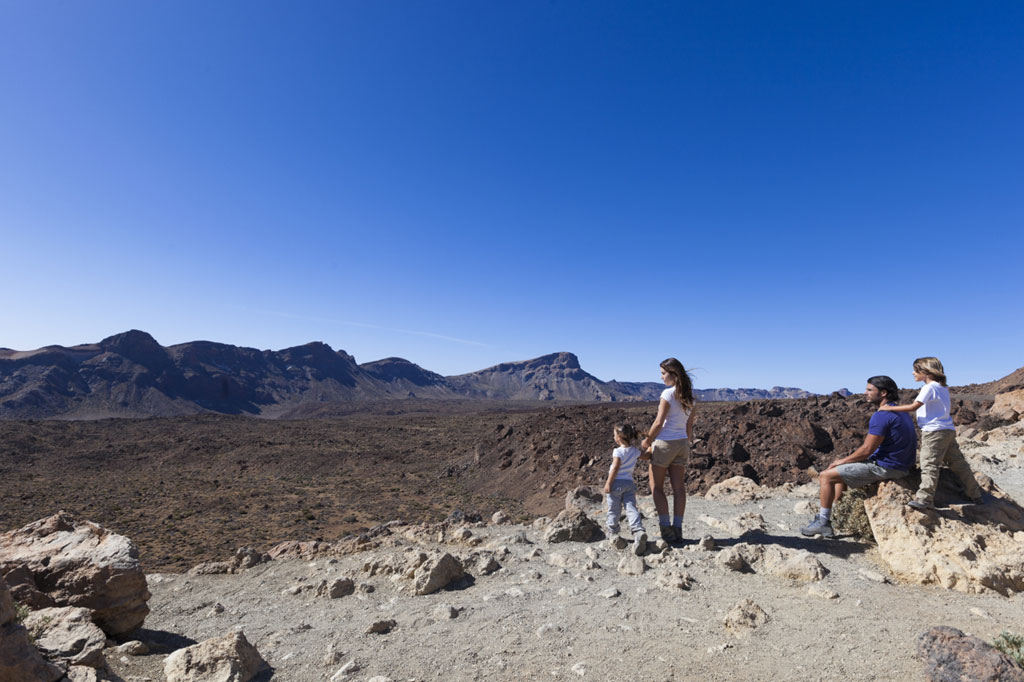
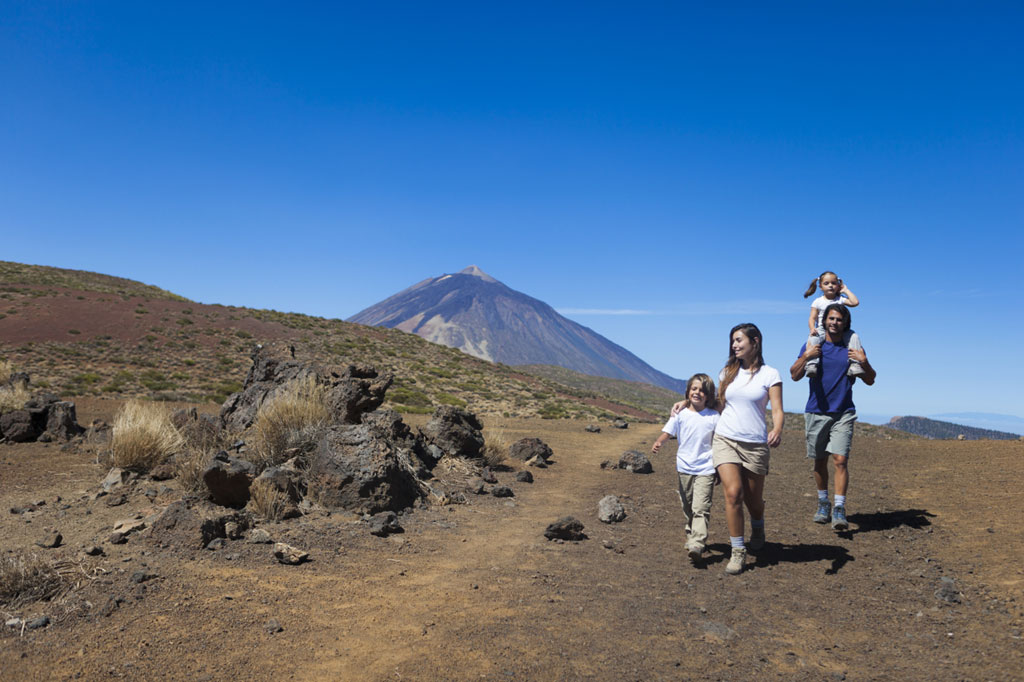
Yes, Teide National Park can be visited with children and is one of the most interesting family excursions to do during a trip to Tenerife. The park has many accessible spots where little ones can discover volcanoes, rock formations and landscapes that look as if they come from another planet. For a family visit, it is usually advisable to choose easy routes, stop frequently at the viewpoints and avoid activities that are too demanding because of the altitude. Some spots, such as the Roques de García or certain areas close to the road, let you enjoy the scenery without having to go on long walks. If you are visiting Teide by car with children, it is a good idea to bring water, some food, sun protection and warm clothing, as the temperature at altitude can be much lower than on the coast, even on sunny days.
How to visit Teide National Park independently or on an excursion?
Teide National Park can be visited in different ways, so the best option will depend on the time available and the type of experience each traveller is looking for.
- Visiting independently is a good choice for those who want to explore the park at their own pace. A car gives you more freedom to stop at viewpoints, choose routes and adapt the itinerary to your own rhythm. It is also possible to get there by public transport, although connections are more limited and timetables need careful planning.
- Organised excursions are a convenient option for those without a vehicle or who prefer to explore the park with a guide. There are excursions to Teide from different parts of Tenerife, including departures from the north of the island, which let you discover the highlights without worrying about driving.
The choice will depend on each traveller’s preferences: a car offers flexibility, while a guided excursion makes it easier to learn about the park’s history, geology and curiosities.
What permits do you need to visit Teide?
You do not need a general access permit to visit Teide National Park. If your visit involves driving through the park, enjoying its viewpoints or walking some of the authorised trails, you will not normally need to buy a ticket. However, some specific activities do require prior authorisation, due to the protection of the environment and the need to control the impact on certain areas. For example, to climb to the summit of Teide you need to apply for a specific permit, as it is a particularly sensitive area with a limited number of daily visitors. There may also be special regulations for certain trails, organised activities or large groups. Before setting out on a route or planning a climb to higher areas, we recommend checking the park’s access conditions, any restrictions and its recommendations. That way, your visit will be safer and will help to preserve one of the most important natural areas in the Canary Islands.
What is the weather like in Teide National Park and what are the temperatures?
The climate in Teide National Park is very different from that of Tenerife’s coastal areas. Due to its high altitude, it has typical high-mountain conditions, with lower temperatures, dry air, strong solar radiation and weather changes that can happen quickly. Temperatures are much lower than in other parts of the island. In the most visited areas of the park, at around 2,000 metres above sea level, the average annual temperature is around 10-11 ºC (50-52 ºF), although it can vary considerably depending on the time of year and time of day. In summer, daytime temperatures are usually between approximately 20 and 25 ºC (68 and 77 ºF), but nights and higher areas can be cool. In winter, temperatures close to 0 ºC (32 ºF) are common in the higher areas, and at times there may be snow or ice. Before visiting Teide, it is advisable to check the weather in Teide National Park, bring warm clothing even on sunny days, use sun protection and drink plenty of water. The sun is especially intense because of the altitude, so the perceived temperature can be misleading. The best time to visit the park depends on the type of experience you are after: spring offers a wealth of scenery thanks to the flowering of endemic species, while autumn and winter usually bring a quieter atmosphere and excellent visibility.
What safety tips should you bear in mind when visiting Teide National Park?
Teide National Park is a high-mountain environment, so it is important to prepare your visit with the altitude, temperature changes and the characteristics of the volcanic terrain in mind. Although some areas are accessible to all kinds of visitors, conditions can change quickly, especially on hiking routes or at higher elevations. To enjoy Teide safely, we recommend that you:
- Check the weather forecast before you go, as wind, snow, ice or fog can change the conditions of trails and access roads.
- Wear clothing suitable for high mountains, even in summer. It is advisable to dress in layers and bring a warm garment, as the temperature can be very different from that on the coast.
- Wear comfortable footwear with good grip, especially if you are going to walk on volcanic terrain, where there may be loose stones and uneven ground.
- Carry enough water and sun protection, as the altitude increases the intensity of solar radiation and the dry air encourages dehydration.
- Stick to waymarked trails and authorised areas, avoiding straying from the paths in order to protect the volcanic landscape and reduce the impact on the environment.
Take the altitude into account, especially when heading towards areas near the summit of Teide. Some people may experience tiredness, dizziness or shortness of breath, so it is best to progress gradually and rest when needed.
- Plan your route according to your experience and fitness, avoiding demanding routes if you are not adequately prepared.
- Carry a mobile phone with sufficient battery and let someone know your planned route if you are doing a long or little-used trail.
- Do not collect stones, plants or other natural items, and take all your rubbish with you to help preserve this protected area.
- Check whether your chosen route requires a permit or advance booking, especially for regulated access points such as certain summit trails.
With good planning, visiting Teide National Park is a safe experience suitable for different types of travellers, from those who tour its viewpoints by car to those who go trekking through its volcanic landscapes.
Where to eat in Teide National Park?
The options for eating inside Teide National Park are more limited than in other tourist areas of Tenerife, as it is a protected natural area where the aim is to minimise environmental impact. Around the park there are a few establishments where you can have a drink, buy basic supplies or take a break during your visit. Many visitors also bring their own food and make use of the designated areas to rest while enjoying the scenery. If you are looking for a more complete dining experience, the nearby towns have restaurants where you can try traditional Canarian dishes such as papas arrugadas, local cheeses, meats and other products of island cuisine. Planning where to eat is especially advisable if you are going on a full-day excursion, a hiking route or a visit outside normal mealtimes.
Where to stay near Teide National Park?
Although Teide National Park can easily be visited on a day trip from anywhere in Tenerife, staying nearby lets you enjoy the surroundings more peacefully and experience moments such as sunrise, sunset or stargazing. Accommodation within the park itself is very limited. The best-known option is the Parador de Las Cañadas del Teide, located in an exceptional setting facing the volcano. There is also accommodation in nearby towns such as La Orotava, Vilaflor and Santiago del Teide, or in nearby rural areas. If you are looking for tourist accommodation near Teide, the choice will depend on the type of trip. The north offers a combination of nature and traditional villages, while the south provides easy access from the main beach resorts.