
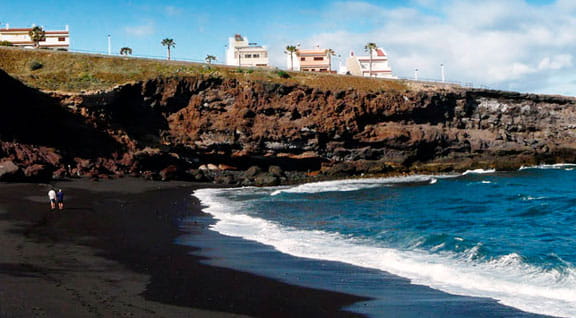
Fasnia
Located in southern Tenerife, the municipality of Fasnia is certainly worth visiting. It ranges from the coast to the peaks, encompassing a world of treasures such as the chapels of Nuestra Señora del Carmen, La Montaña and San Joaquín (which has its own intrinsic decadent charm despite being barely more than ruins).
Fasnia is a municipality in south-eastern Tenerife bordering Güímar, Arico and La Orotava. Although much of its land is arid due to scarce rainfall, the peaks are populated with pine trees due to the influence of the trade winds. Archaeological settlements have been found in the ravines of Herques and Los Muertos. In fact, there are written records from the 16th century stating that this was one of the regions where the Guanches coexisted with the Castilians after the conquest. Fasnia is alive with vineyards, flowers, potatoes and tomatoes. Proudly adorning its coast are the cliff of La Hondura, a declared Site of Scientific Interest, and the rock formations of Los Roques, with their unique scenic beauty.
Routes around the municipality
For hikers, there is a circular trail of intermediate to low difficulty offering some insight into the importance of water in Fasnia as it journeys through a number of hamlets whose origins are closely bound to water sources. This circular trail sets off from La Zarza and lasts approximately three hours, journeying along tracks, stone pathways and paved roads. Another option is the threshing trail, which reveals the historical significance of farming in the municipality of Fasnia. On their way, visitors will see the threshing fields up-close and understand their traditional use.
Approved trails in the municipality
The Royal Road of Fasnia travels northbound along an dirt track past old houses built in the traditional architectural style until it reaches the caves of Herques; southbound, the trail reveals a wonderful view of the entire municipality and walkers can visit the chapel of Los Dolores or the ruins of the San Joaquín chapel.We answer to your frequently asked questions
Everything you need to know about Fasnia
Where is Fasnia?
Fasnia is located in the south-east of Tenerife, between the municipalities of Güímar and Arico. It is a municipality that combines midland areas, coastline and natural spaces, with a marked rural character.
How to get to Fasnia?
Reaching Fasnia is straightforward thanks to its good connection with the southern axis of the island:
- By car: the most practical option is via the TF-1 motorway, taking the exit for Fasnia and continuing along well-signposted local roads leading to the town centre and the various settlements within the municipality. This provides freedom to move between the midlands and the coast.
- By public transport: several bus lines operated by TITSA connect Fasnia with other south-eastern municipalities and with Santa Cruz de Tenerife. Although it is possible to reach Fasnia without a car, schedules are more limited than in urban areas.
What is the distance between Tenerife North and South Airports and Fasnia?
- The distance between Tenerife North Airport and Fasnia is approximately 30–40 kilometers, and the journey by car usually takes between 35 and 45 minutes, depending on traffic.
- From Tenerife South Airport, the distance is shorter, about 20–25 kilometers, with an estimated time of 20–30 minutes by car, mainly using the TF-1.
What is the weather like in Fasnia?
The climate in Fasnia is mild throughout the year, with predominantly sunny days. Winters are generally temperate and summers warm, particularly in areas closer to the coast. Typical temperatures range from around 18 °C in winter to 26–28 °C in summer, with slight variations depending on altitude and the area of the municipality.
What to see in Fasnia?
Fasnia offers several points of interest for a calm, outdoor visit:
- Town centre and traditional settlements, with a quiet atmosphere.
- Volcanic landscapes, such as the area around the Fasnia volcano.
- Coastal zone, featuring beaches and natural rock pools.
It is an ideal destination for discovering a more rural and less crowded side of Tenerife.
What are the beaches or natural pools in Fasnia?
On the coast of Fasnia you can find bathing areas of natural origin, formed by pools and small volcanic coves. Highlights include areas such as Los Roques Beach, as well as natural pools and ponds scattered along the coastline. These are sparsely urbanized areas, frequented mainly by residents, and it is advisable to visit them when the sea is calm due to their natural character.
Can you go hiking in Fasnia?
Yes, hiking is a popular activity in Fasnia, thanks to its network of traditional paths and rural trails. Highlights include routes through the Barranco de Fasnia, old paths connecting midlands and coast, and trails through volcanic landscapes and agricultural areas. These are generally relaxed itineraries, designed to explore the territory and enjoy a more rural, less crowded Tenerife.
Why is Fasnia famous?
Fasnia is renowned for its figs, a product closely tied to the municipality’s agricultural traditions. Known for their quality, they have historically played an important role in the local economy. Today they remain a symbol of Fasnia’s rural identity and a reference point when discussing traditional products from south-east Tenerife.
Where to eat in Fasnia?
In Fasnia, visitors will find bars and small Canarian restaurants serving simple dishes made from local products. The culinary offer is limited but maintains an authentic character and a calm, family-friendly atmosphere, mostly frequented by local residents.
Where to stay in Fasnia?
Accommodation in Fasnia mainly consists of rural houses and holiday homes, many located in natural and quiet settings. These options are ideal for travellers seeking rest, contact with nature, and a stay away from Tenerife’s busier tourist areas.
What festivals are celebrated in Fasnia?
Fasnia’s festivals are linked to religious traditions and local popular celebrations. Throughout the year, cultural events, music and community activities are organised, reflecting the life of the municipality. Exact dates may vary each year, so it is advisable to check before visiting.