
Casa de la Alhóndiga
This two-storey building was erected in the early 17th century to house the corn exchange, a meeting hall and a prison. The passage of time and…
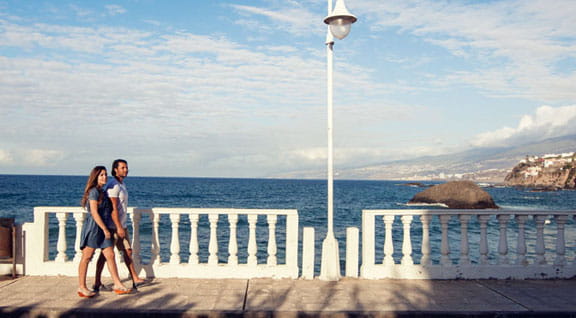
San Juan is a small municipality covering just over 20 km2 (7.7 sq miles) but, as is so often the case in Tenerife, it is full of charm. Located by the coast, the best way to enjoy it is to simply take in its laid-back atmosphere and explore its lovely buildings, such as Casa de los Alonso del Castillo and the Corn Exchange. A must on the tour is a visit to the district of Los Quevedos, which beautifully preserves a considerable number of traditional buildings.
This municipality in northern Tenerife borders on Los Realejos and La Guancha, covering 20.66 km2 (7.97 sq miles). The highest point is San Juan de la Rambla at an altitude of 2,000 m (6,560 ft) above sea level, which plunges down a steep hillside full of farm terraces towards the sea. San Juan de la Rambla was founded by the Portuguese colonist Martín Rondríguez in the early 16th century. He built a chapel here in honour of San Juan Bautista and several families came to settle in the area around the chapel, drawn by the quality of the agricultural land. In 1925, King Alfonso XIII granted this municipality the honorary title of Villa. Currently, its greatest appeal is the rich variety of its landscapes, ranging from the mountain to the beach, where modern life merges with a more traditional village pace of life.
San Juan de la Rambla is a small municipality located on the north coast of Tenerife, between Los Realejos and Icod de los Vinos. It extends from the Atlantic coastline to mid-altitude and mountain areas, which allows it to offer a wide variety of landscapes. The municipality preserves a historic centre with traditional Canarian architecture, quiet streets and viewpoints overlooking the Atlantic Ocean. In addition, it forms part of one of the greenest areas in the north of the island, known for its agriculture and spectacular volcanic landscapes.
Getting to San Juan de la Rambla is easy from different parts of Tenerife. By car: the main access route is the TF-5 motorway, which connects Santa Cruz de Tenerife with the north of the island. From this motorway, the municipality is reached via the TF-351 or TF-352 roads.
How to get to San Juan de la Rambla from the airports
It is also possible to arrive by guagua (bus) via several TITSA lines connecting the municipality with other towns in northern Tenerife.
Among the most interesting places to see in San Juan de la Rambla are:
Activities in San Juan de la Rambla are closely linked to nature and local culture. Among the most popular options are:
Thanks to its natural surroundings, it is an ideal destination for those seeking tranquillity and authentic landscapes.
In San Juan de la Rambla, it is possible to find bars, restaurants and guachinches where homemade food is served together with local wines. Many restaurants in San Juan de la Rambla are located in the historic centre and in the district of Las Aguas. Typical dishes commonly found include:
Yes, the best-known natural pool in San Juan de la Rambla is Charco de La Laja, located next to the district of Las Aguas. It is a natural pool formed by volcanic lava and filled with ocean water. It is one of the most photographed places in the municipality and a very popular place for swimming when the sea is calm. In addition, along the coast near the municipality there are other natural pools and bathing areas among volcanic formations.
The weather in San Juan de la Rambla is mild and temperate throughout the year, with average annual temperatures usually ranging between 18 °C and 26 °C. As it is located on the northern slope of Tenerife, the municipality may experience slightly more cloud cover and humidity than the south of the island, especially in the mid-altitude areas. Thanks to its pleasant and stable climate, San Juan de la Rambla is an ideal place to enjoy outdoor activities, coastal walks and nature routes at any time of the year.
The festivals of San Juan de la Rambla reflect the cultural tradition of northern Tenerife. Among the most important are:
These festivals are a good opportunity to discover local culture and identity.