Other details
- Closed: 24, 25 and 31 December, 1 and 6 January and Carnival Tuesday.
- Tuesday to Saturday, from 9am to 8pm.
- Sundays, Mondays and public holidays 10am to 5pm.
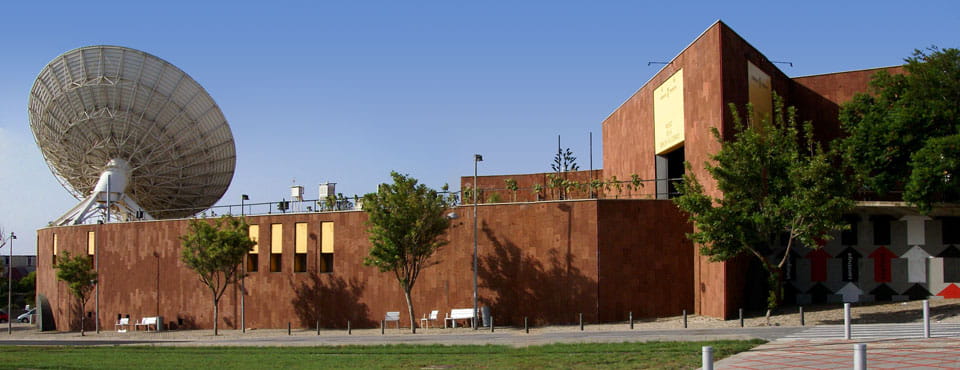
The Museum of Science and the Cosmos (MCC) is a unique place – a mixture of a traditional museum and a theme park – where visitors have the chance to approach the laws and principles governing Nature, from the way the human body works to the movements of the stars.
Activities including temporary exhibitions, planetarium sessions, informative talks, educational workshops, showings and debates on films with scientific content and astronomy camps and nights complement its range of exhibitions.
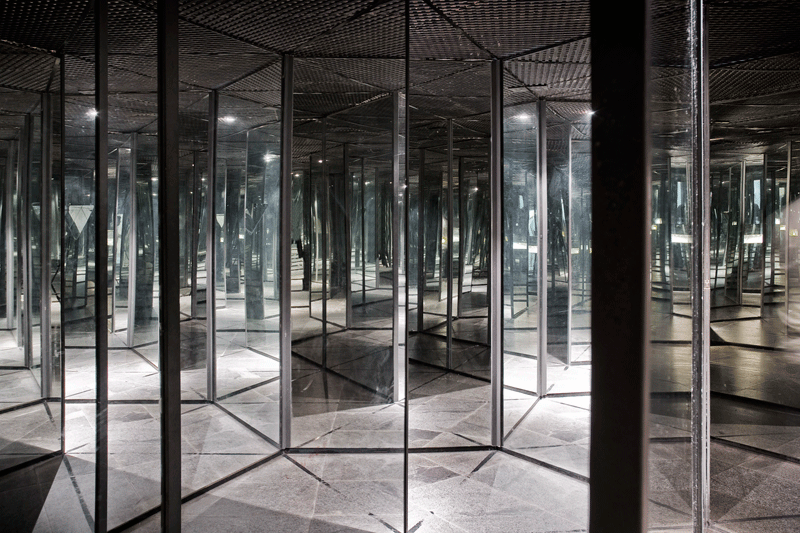
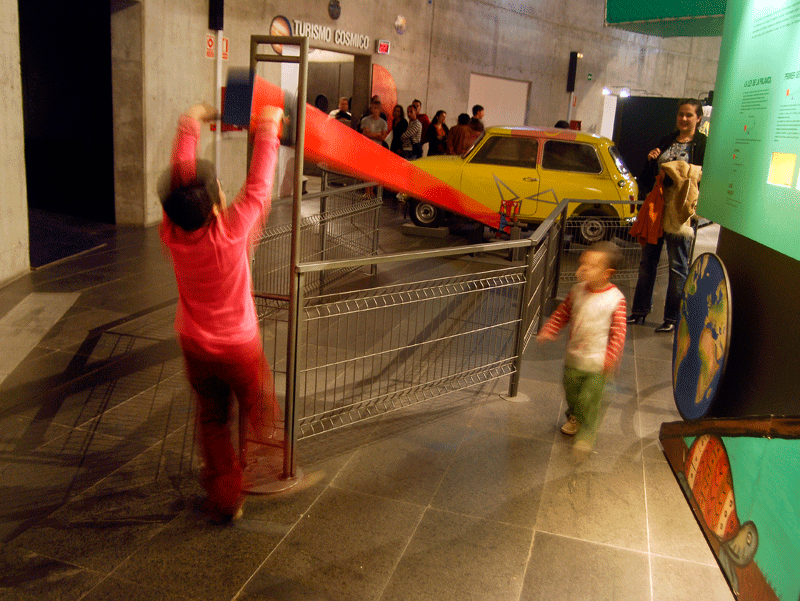
The Museum of Science and the Cosmos, also known by the initials MCC, is an interactive museum located in San Cristóbal de La Laguna. Its approach combines science communication, experimentation and learning, with a particular focus on astronomy and the study of the Universe. The museum was promoted by the Instituto de Astrofísica de Canarias in collaboration with the Cabildo de Tenerife. Unlike a traditional museum, where exhibits are viewed from a certain distance, many of the installations here invite visitors to touch, observe, try things out and draw their own conclusions. Through experiments and interactive modules, visitors can explore concepts related to stars, planets, gravity, light, movement, the human body and other areas of science. One of its main attractions is the planetarium, where astronomy-related content is projected beneath a dome. The sessions change throughout the year and may be aimed at different audiences and age groups, so it is advisable to check the programme before visiting. The museum also has spaces for temporary exhibitions, educational activities, workshops and talks. For younger children, it offers Microcosmos, an accessible room designed for children aged between 3 and 7, where they can play, handle objects and experiment with activities adapted to their stage of learning. Thanks to its participatory approach, the MCC is interesting both for families and for adults who wish to understand science in an accessible way. It is best to explore the museum without rushing and spend time trying the experiments rather than simply observing them.
The Museum of Science and the Cosmos is located at Avenida de los Menceyes, 70, in San Cristóbal de La Laguna, near its junction with Camino de la Hornera. It is situated within Tenerife’s metropolitan area, between the urban centres of Santa Cruz and La Laguna. One of the most convenient ways to get there by public transport is to take tram Line 1. The Museo de la Ciencia stop is directly opposite the building and connects the museum with Santa Cruz de Tenerife, La Cuesta and central La Laguna. You can also get there by guagua, or bus, using routes 014, 201 and 206, which stop on Avenida de los Menceyes beside the museum. Route 014 connects Santa Cruz and La Laguna via La Cuesta, while routes 201 and 206 operate urban services from the La Laguna transport interchange through neighbourhoods such as La Verdellada. The availability of each route may depend on the direction of travel and the timetable. If you are travelling from Santa Cruz, you can take route 014 or use tram Line 1 to reach the museum. From the La Laguna transport interchange, you can continue by tram or check connections on routes 201 and 206. As routes, frequencies and stops may be affected by roadworks or diversions, it is advisable to check the TITSA journey planner and service notices before setting out. It is also possible to travel by private vehicle. Before setting out, check the most suitable route from your accommodation and the parking options available nearby. At the busiest times, public transport may be more convenient. It is advisable to check the museum’s opening hours and the planetarium programme before beginning your journey. Planetarium sessions take place at specific times and are not necessarily available throughout the museum’s general opening hours.
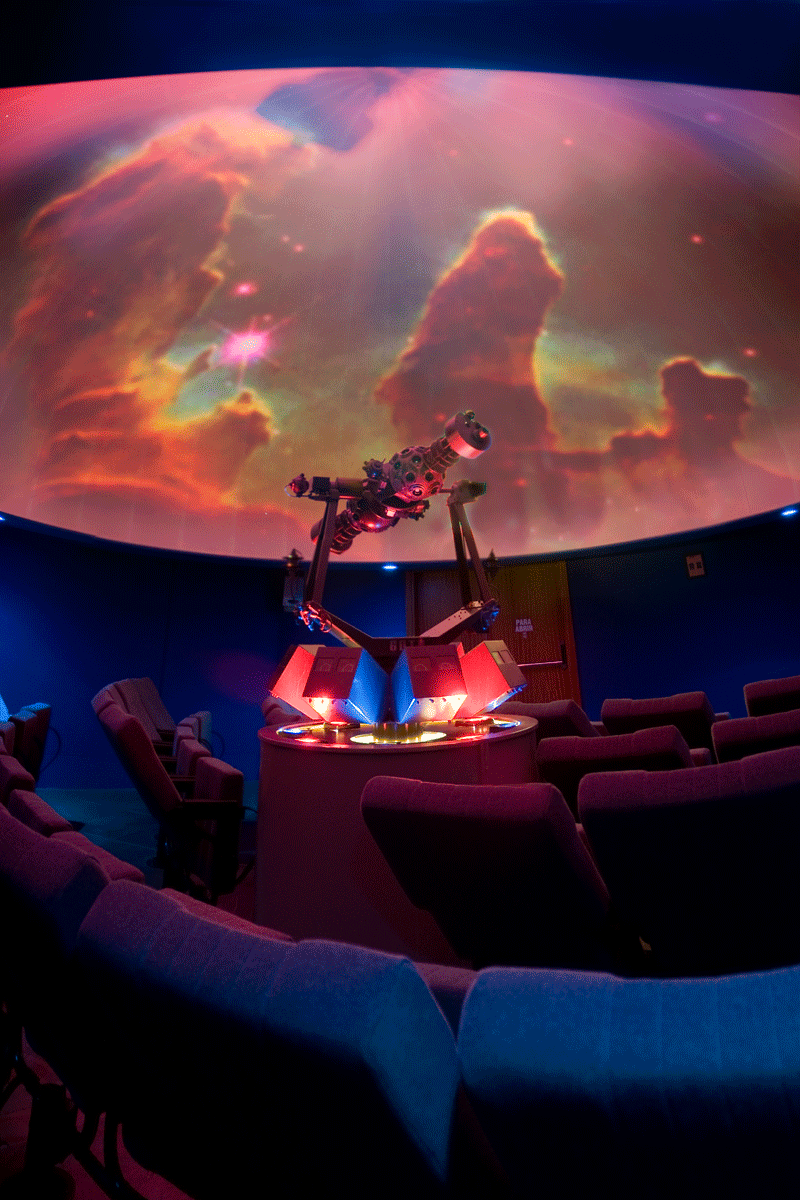
The planetarium is one of the museum’s most notable spaces. Its high-resolution digital projection system can recreate the sky and explore the Universe from different places and points in time, creating an immersive experience beneath the dome. The programme includes astronomy productions adapted to different audiences. Some sessions are designed especially for families, while others explore stars, planets, galaxies or current research projects in greater depth. The titles and times of the screenings change, so it is advisable to check the official programme before visiting. The planetarium has limited capacity and requires a separate paid ticket from the one for the permanent exhibition.
Yes. The museum is a particularly interesting option for families because it allows visitors to learn through experiments, games, optical illusions and modules that encourage observation and hands-on interaction. Rather than explaining science solely through written information, many of the activities help visitors discover why certain phenomena occur. For children aged between 3 and 7, there is the Microcosmos children’s room, an accessible space where they can move around accompanied by an adult, play with different materials and take part in small experiments adapted to their age. Its modules include the Aerophone, along with activities such as the Giant Magnifying Glass, Geometric World, Butterfly Effect and Fighting Dinosaurs. These experiences are designed to stimulate curiosity, creativity and learning through play. To make the most of the visit, it is advisable to select the areas best suited to the children’s ages and allow plenty of time for experimentation. It is also worth checking the planetarium programme and family activities, as some have recommended ages, limited places or require registration.
In addition to the permanent exhibition, the Museum of Science and the Cosmos organises workshops, screenings, talks, temporary exhibitions, educational activities and astronomy outreach events. The programme may include observations, astronomy nights, holiday activities and experiences for families or schools. The museum also schedules talks on the Solar System, eclipses, solar physics, stars, galaxies and the observatories of the Canary Islands. There is not necessarily a fixed daily talk about the Sun: these talks form part of a changing programme and are usually held on specific dates and at particular times. Before visiting, check the official events calendar to see which exhibitions and activities coincide with your visit. Each listing states the intended audience, timetable, capacity and whether booking is required.
The current general admission fee for adults is €5, while the rate for Canary Islands residents is €3. Students, retired people, visitors over the age of 65, large families and groups of more than eight people are entitled to a reduced rate of €3.50, or €2 for residents. Admission is free for children under the age of 8, ICOM members and certain teachers, guides and school groups, in accordance with the conditions established by Museos de Tenerife. Admission to the planetarium costs €1 per person and is paid for separately. The permanent exhibition can be visited free of charge on Fridays and Saturdays from 4.00 pm until closing. When either of these days falls on a public holiday, free admission begins at 2.00 pm. This free-admission period does not necessarily mean that planetarium sessions are also free. Prices and conditions may change, so it is advisable to check them again before visiting.
The Museum of Science and the Cosmos is currently open:
Admission to the exhibition rooms ends 30 minutes before closing. The museum is closed on 24, 25 and 31 December, and on 1 and 6 January. Special closures or changes may also apply during Carnival, so it is advisable to check the official information if your visit coincides with these dates. The planetarium has its own programme and does not necessarily offer sessions throughout the museum’s opening hours. Check the screening times before visiting so that you can include a session in your itinerary.
As a guide, it is advisable to allow between one and a half and two hours to explore the permanent exhibition, try the main interactive modules and visit the areas devoted to astronomy, the human body and technology. If you wish to attend a planetarium session, visit a temporary exhibition or take part in an activity, you may need between two and a half and three hours. The final duration will depend on the group’s interests and the time spent on each experiment. This estimate is based on the range of modules, rooms and activities available. Families with young children can choose a shorter route and focus on Microcosmos, a selection of interactive modules and a screening suitable for their age. Check the times in advance to avoid waiting between the general museum visit and the planetarium session.
For general information, you can contact the museum by telephone on +34922 31 52 65. You can also email reservasmcc@museosdetenerife.org with enquiries relating to bookings, groups and activities. It is advisable to contact the museum in advance if you wish to organise a school visit, take part in a workshop, book an activity or ask about specific accessibility requirements. You can also confirm whether a planetarium session or exhibition will be available during your visit.