
Alcalá Beach
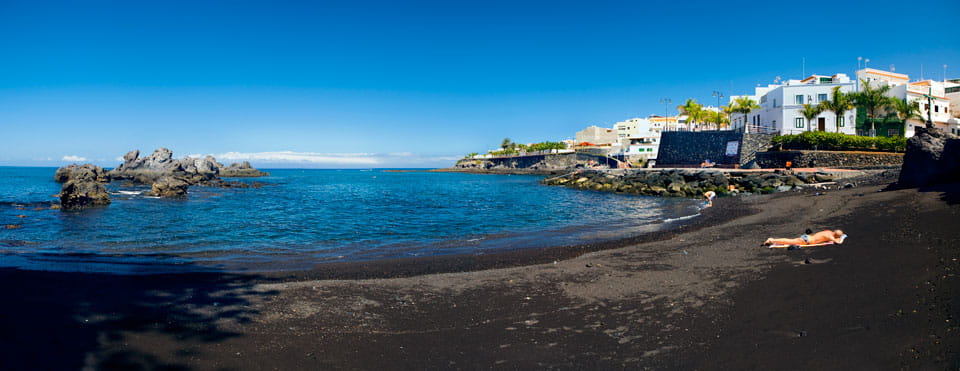
Alcalá is a great place for you to discover the lovely traditions of the town it is named after. Located in the municipality of Guía de Isora, by Playa San Juan, this beach made of grey sand and lapilli lies near a small dock with fishing boats and a host of water sports.
The area serves wonderful local dishes, with a variety of fresh fish and shellfish. Don't miss the spectacle of the sunset with a view towards the island of La Gomera. The array of colours as the sun disappears into the ocean combined with the sea breeze on the promenade make this a truly unforgettable moment.
Useful information
- Location: Guía de Isora.
- Length: 30 m (100 ft).
- Width: 15 m (50 ft).
- Composition: Shingle and black sand.
- Means of access: On foot (easy) or by car.
- Disabled access: No.
- Type of beach: Urban.
- Amenities: Foot showers, waste bins, bars and restaurants.
- Parking facilities: Yes.
- Bus service: Yes (inter-city).
- Coordinates: 28° 12' 02.88'' N 16° 49' 42.66'' W.
- UTM coordinates: X: 320 533.00 Y: 3 120 800.00 H:28.
Address
Alcalá Beach
La Playa, 42, 38686 Alcalá
Weather Today
Maximum: 25º
Minimum: 17º
Guía de Isora. Clouds will alternate with sunshine on Friday morning. In the afternoon, scattered showers. At night clouds will alternate with clear skies. Temperatures will remain unchanged.
We answer to your frequently asked questions
Everything you need to know about Playa de Alcalá in Tenerife
What is Playa de Alcalá like and where is it located?
Playa de Alcalá is a small urban cove located in the coastal village of Alcalá, within the municipality of Guía de Isora, in south-west Tenerife. It lies beside a small harbour traditionally used by fishing boats, giving it a local, maritime atmosphere. The beach is around 30 metres long and consists of gravel, volcanic lapilli and black volcanic sand. It is a suitable option for those looking for a small bathing area integrated into the village and close to restaurants, shops and the seafront promenade. It should not be confused with the nearby La Jaquita beach. The latter forms part of a larger coastal area with several black-sand coves, natural pools, landscaped areas and a wider range of services.
How do you get to Playa de Alcalá from Santa Cruz de Tenerife?
By car, you can cover the approximately 96 kilometres (60 miles) between Santa Cruz de Tenerife and Alcalá by taking the TF-1 motorway south and continuing towards Guía de Isora. You should then take the appropriate exit for Alcalá and follow the signs towards the coastal village and the seafront promenade. There is parking near the beach, although finding a space may be more difficult at the busiest times. By public transport, one option is to take a guagua, or bus, from the Santa Cruz interchange to Costa Adeje bus station on route 110. From Costa Adeje, you can continue on route 477, which connects the station with Los Gigantes and passes through Playa San Juan and Alcalá. From Guía de Isora bus station, you can also use routes 493 or 494, which connect the municipal centre with Playa San Juan, Alcalá and other coastal towns. As timetables and frequencies may change, it is advisable to check TITSA’s journey planner and service notices before setting out.
What services are available at Playa de Alcalá?
Playa de Alcalá has foot showers, bins, parking and interurban bus connections. As it is integrated into the village, you will also find bars and restaurants within a short walking distance, particularly in the streets near the harbour and the seafront promenade. It is a small cove, and its services are more limited than those of other nearby beaches. It is not listed as a beach with adapted access, and there are no indicated changing rooms, accessible toilets, sunbed hire or children’s area within the cove itself. Those who require more facilities can continue along the coast to La Jaquita, where there are showers, changing rooms, toilets, a children’s area, sunbed and parasol hire, a bar, parking and safety and assistance services.
What activities can you do at Playa de Alcalá and in the surrounding area?
At Playa de Alcalá, you can swim when sea conditions are favourable, sunbathe and enjoy the atmosphere of the small fishing harbour. As it is a compact urban cove, it is important to respect the areas used by boats and check the swell conditions before entering the water. Along the Alcalá coastline and in other parts of the Guía de Isora coast, you can take part in water sports such as sailing, kayaking and paddleboarding. The Municipal Water Sports School runs sailing activities and also offers kayaking and paddleboarding tuition for different ages and levels of experience. You can also find diving opportunities and other activities for discovering the seabed. Not all of them depart directly from Playa de Alcalá, so it is advisable to ask a specialist school or company about the meeting point, what equipment is included and whether previous experience is required. Before booking a water-based activity, check the minimum age, required level, duration, equipment, insurance and cancellation conditions. If the sea is not safe, always follow the instructions of the organising company and avoid attempting the activity independently. Another option is to walk along the seafront promenade connecting Alcalá with La Jaquita. Along the way, you will find small black-sand beaches, natural pools, landscaped areas, a cycle lane and facilities for outdoor exercise. You can complete the day with a fish or seafood meal at one of the village restaurants, watch the sunset with La Gomera on the horizon or continue towards Playa San Juan, Puerto Santiago and Los Gigantes.
Is Playa de Alcalá suitable for visiting with children?
Playa de Alcalá can be pleasant for a short family visit because of its urban location and proximity to restaurants and services. However, it is a small cove of gravel and black sand, and it does not have adapted access or its own children’s area. Sea conditions may also change, so children must remain accompanied at all times. For a full family day out, the nearby La Jaquita beach may be a more practical alternative. Its coastal area includes small beaches, natural pools, changing rooms, toilets, a children’s area and other services designed for a longer stay. Before swimming, check the flags, the instructions given by lifeguards and the swell conditions. It is also advisable to bring suitable footwear for the gravel and volcanic rocks, sun protection, water and a change of clothes for children.
Is Playa de Alcalá accessible to people with reduced mobility?
Playa de Alcalá does not have the official designation of an adapted beach. Although the village itself is easy to reach and some parts of the surrounding area can be explored, access to the sand and gravel may present difficulties for people with reduced mobility. La Jaquita beach, located on the same stretch of Alcalá coastline, is a more suitable option for those who require accessible facilities. It has adapted access, a mixed accessible toilet, changing rooms and other facilities. The seafront promenade also provides an urbanised surface along much of the coast. Accessibility needs may vary from one person to another. Before travelling, it is advisable to confirm the availability of walkways, bathing assistance, reserved parking spaces and support services.
Are there natural pools near Playa de Alcalá?
Yes. Along the seafront promenade between Alcalá and La Jaquita, you will find natural pools formed along the volcanic coastline. These areas allow you to enjoy the water in a setting different from a conventional beach and have nearby spaces for sunbathing. The natural pools along the La Jaquita promenade are appreciated for their waters and their open views towards the ocean and La Gomera. They are located beside the section of promenade that continues towards the beaches of La Jaquita. Even when the water appears calm, waves may pass over the barriers or enter with force under certain tidal conditions. Do not approach the edges when the sea is rough, and respect any closures, signs or safety recommendations.
How do the tides affect Playa de Alcalá and the natural pools?
The tide and the condition of the sea can alter the amount of space available in the small cove, the conditions for entering the water and the level of the natural pools. At high tide, some areas of sand, gravel or rock may be more deeply covered. At low tide, slippery surfaces and uneven seabeds may become exposed. Before visiting, check the marine forecast and tide table for the south-west coast of Tenerife. You should also observe the actual swell when you arrive, as a favourable tide alone does not guarantee safe conditions. At the natural pools, avoid swimming if waves are striking the edges forcefully or if rough sea warnings are in place. It is also not advisable to stand on wet rocks to take photographs, as they may be slippery.
What is the best time of year to visit Playa de Alcalá?
Playa de Alcalá can be visited throughout the year thanks to the warm, dry and predominantly sunny climate of the Guía de Isora coastline. In this coastal area, average temperatures are around 22–23°C, although they may rise during the hottest months and fall slightly in winter.
- Summer is a good time to enjoy long beach days and swimming, although it usually coincides with larger numbers of visitors and stronger solar radiation. If you visit during these months, bring water and sun protection, and avoid prolonged exposure during the middle of the day.
- Spring and autumn usually offer a pleasant balance of mild temperatures, sunny days and a somewhat quieter atmosphere. They are good seasons for combining swimming with a walk along the Alcalá and La Jaquita coastline, taking part in water sports or watching the sunset.
- During winter, there may also be suitable days for walking, sunbathing or swimming. However, sea conditions may vary regardless of the outside temperature. Before visiting, check the weather forecast, swell and tides, particularly if you plan to use the natural pools.
Where can you watch the sunset at Playa de Alcalá?
The seafront promenade and the area around the harbour are good places to watch the sunset. The orientation of the coast allows you to see the changing light over the ocean and, when visibility is good, the silhouette of La Gomera on the horizon. You can also continue walking towards La Jaquita and find one of the open areas beside the natural pools. This section offers different views of the volcanic coastline and the ocean. To enjoy the sunset at a relaxed pace, arrive in good time and choose a safe area of the promenade. Avoid standing on wet rocks or too close to the waves, particularly when the tide is rising.
Is there a tourist information office near Playa de Alcalá?
The La Jaquita service area includes a tourist information office, as well as toilets, changing rooms, a bar and other facilities. It can be useful for requesting information about the municipality, nearby beaches, routes, activities and places of interest. Availability and opening hours may change according to the season or the needs of the service. It is advisable to check them before travelling specifically to the office. You can also consult Guía de Isora’s tourist information in advance and combine your visit with other places in the municipality, such as Playa San Juan, the historic centre, the hamlets of Chirche and Aripe or the Punta Blanca coastline.
Where can I stay near Playa de Alcalá?
In the village of Alcalá and around La Jaquita, you will find different accommodation options, ranging from hotels to apartments and holiday rentals. Staying in this area allows you to walk to the seafront promenade, the natural pools and the village restaurants. Before booking a hotel near Playa de Alcalá, check the actual distance to the cove, as some accommodation is closer to La Jaquita than to Alcalá harbour. It is also advisable to check whether the property has parking, accessible facilities and convenient access to the promenade. If you prefer an area with a larger beach and a wider range of services by the sea, you could also consider Playa San Juan. This beach has adapted access, changing rooms, toilets, a children’s area, sunbed hire and a lifeguard service.


