Other details
Visiting times:
Mondays from 3 pm to 7.30 pm.
Tuesdays to Sundays from 7.30 am to 7.30 pm.
Mondays from 3 pm to 7.30 pm.
Tuesdays to Sundays from 7.30 am to 7.30 pm.
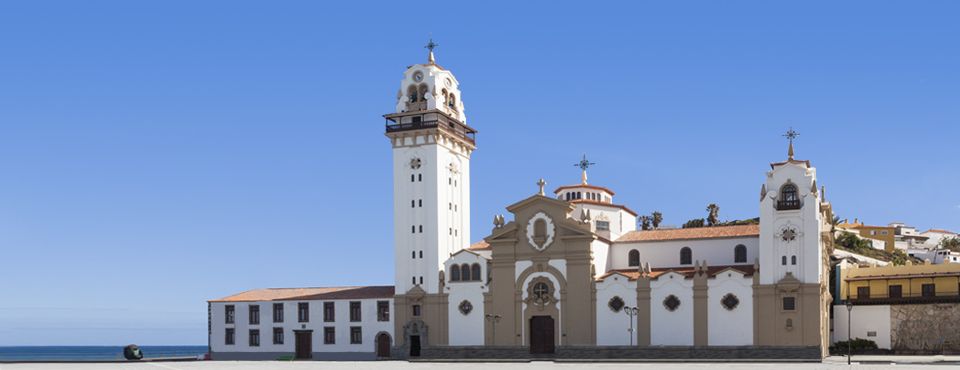
The basilica is the work of architect Enrique Marrero Regalado and was erected at the behest of the bishop of Tenerife, Domingo Pérez Cáceres, who was born in Güímar. With a regionalist aesthetic, the structure comprises three naves with a Mudejar-style ceiling and a cupola standing 25 m (82 ft) high to crown the transept. The central tower rises 45 m (150 ft) high and features a Canarian balcony. The main chapel houses a figure of the virgin of Candelaria, who was proclaimed the Patron Saint of the archipelago by Pope Clement VIII in 1599, which was ratified by Pope Pius IX in 1867. Inside there are murals by José Aguiar and paintings by Martín González; other works include the Cristo de la Reconciliación; a Baroque monstrance made in the Canary Islands in the 18th century; and a 16th century baptismal font of great historic value. 16th century. Although the liturgical festivity of Nuestra Señora de la Candelaria takes place on 2 February, her appearance is celebrated on 15 August. That is the date when people from all over the Island set out towards the basilica on a pilgrimage. Beside the basilica is the pilgrim's fountain. Adjacent to the basilica is the Dominican monastery that was built in 1803 after the earlier convent was reduced to ashes. The monastery is governed by Dominican monks who have been Candelaria's priests since 1530. Past the monastery is the Cave of Achbinico or San Blas, where the Guanches placed their figure of the Virgin. The cave has proven to be of great archaeological importance. Right by Plaza de la Patrona de Canarias stand the huge bronze statues of the nine Guanche "menceyes" (kings), created by Tenerife sculptor José Abad.
The Basilica of Our Lady of Candelaria is the main religious temple in the Canary Islands and one of the most visited places in Tenerife. It is located in the municipality of Candelaria, beside the Atlantic Ocean, and is dedicated to the Virgin of Candelaria, patron saint of the Canary archipelago. The basilica has enormous historical, religious and cultural importance because it is linked to the appearance of the Virgin of Candelaria before the conquest of Tenerife. According to tradition, the Guanches venerated the image under the name Chaxiraxi. Today, it is one of the main pilgrimage sites in the Canary Islands, and every year thousands of people visit the sanctuary, especially during the celebrations on 2 February and 15 August.
The Basilica of Our Lady of Candelaria is located in the historic centre of the municipality of Candelaria, on the east coast of Tenerife and next to the Plaza de la Patrona de Canarias. Its location facing the Atlantic Ocean and beside the seafront promenade makes it one of the most visited places on the island. You can get there in several ways:
The visit is usually combined with a walk around the historic centre, the Plaza de la Patrona de Canarias, the Dominican convent and the sculptures of the Guanche menceyes located beside the sea.
The history of the Basilica of Our Lady of Candelaria dates back to the 14th century, when a Gothic carving of the Virgin appeared on the coast of the Güímar valley, approximately a century before the conquest of Tenerife. The first image was venerated by the Guanches and later moved to a sanctuary built in 1526. However, that original carving disappeared during a flood in 1826. The current image was made in 1827 by the Tenerife-born sculptor Fernando Estévez. The basilica that can be visited today began to be built in 1959 thanks to the initiative of Bishop Domingo Pérez Cáceres. The Virgin of Candelaria was proclaimed patron saint of the Canary Islands in 1599 by Pope Clement VIII, a title that was later ratified by Pius IX.
The Basilica of Our Lady of Candelaria was designed by the Canarian architect Enrique Marrero Regalado and built in 1959. The building stands out for its regionalist style and for combining traditional Canarian elements with religious and Mudéjar influences. One of its most recognisable features is the 45-metre central tower, crowned by a Canarian balcony. Inside, the following elements stand out:
A visit to the Basilica of Our Lady of Candelaria allows you to discover both the main religious centre of the Canary Islands and several historical and artistic elements of great value. Inside the basilica, the highlights include:
In the surrounding area, you can also visit:
The usual visiting hours of the Basilica of Our Lady of Candelaria are: Monday: from 03:00 PM to 07:30 PM Tuesday to Sunday: from 07:30 AM to 07:30 PM Opening hours may vary during religious festivals, special celebrations or important liturgical events, especially in August and February.
The Basilica of Our Lady of Candelaria holds Masses and religious services throughout the week, as it is the main Marian sanctuary in the Canary Islands and one of the most important pilgrimage sites on the island. The Mass times at the Basilica of Candelaria in Tenerife may vary depending on the time of year, religious festivals and special celebrations, especially during the festivities of 2 February and 15 August. In addition to the usual Masses, the following are also often held:
To check the latest Mass times, it is best to consult them directly at the basilica itself or through the sanctuary’s official channels before visiting.
The main celebrations of the Basilica of Our Lady of Candelaria take place on: 2 February, the liturgical feast day of the Virgin of Candelaria 15 August, the date that commemorates her appearance During these dates, thousands of people make pilgrimages to Candelaria from different parts of Tenerife and other islands. The celebrations include processions, religious services, historical re-enactments and popular activities. The August pilgrimage is one of the most important religious events in the Canary Islands.
Yes. The area around the Basilica of Our Lady of Candelaria has numerous restaurants, cafés and terraces located beside the seafront promenade and in the streets of the historic centre. In the area, it is common to find:
Many visitors take advantage of their visit to the basilica to eat in Candelaria and walk along the seafront avenue. The atmosphere is usually especially lively at weekends and during religious festivals, when the area receives pilgrims and visitors from all over the island.